

Direct Injection Care: Preventing Carbon Buildup in High-Mileage Kia Engines in Southwest Ohio.
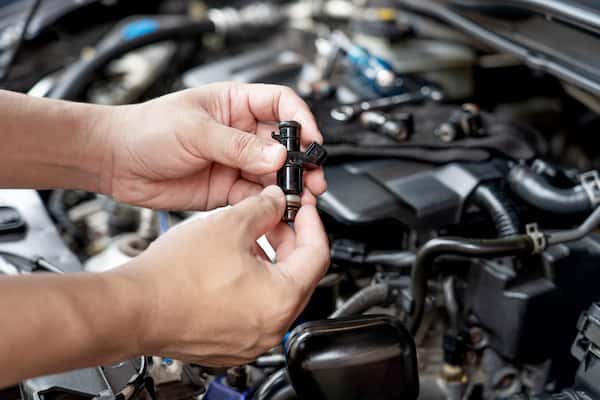
Last August, a 2018 Kia Sportage came into our service bay with 94,000 miles on the odometer and a rough idle that its owner had been monitoring for about four months on his daily commute between Huber Heights and the Dayton Mall area along OH-4. He had added two bottles of fuel system cleaner to the tank over that period assuming it would clear up on its own. When we performed an intake inspection, the intake valves were coated with carbon deposits nearly four millimeters thick. The walnut shell blasting service to restore the engine ran $680. Had he come in at the first sign of rough idle around 75,000 miles, the preventive intake cleaning would have been $380.
Carbon buildup in direct injection engines is one of the most misunderstood maintenance issues facing high-mileage Kia owners in the Miami Valley, and it is one where the window between a manageable preventive service and a significantly more expensive correction closes faster than most drivers expect. The problem is invisible until it is symptomatic, the symptoms are easy to dismiss as something else, and the conventional wisdom about fuel system cleaners actively misleads owners into thinking they are addressing it when they are not.
Kia’s GDI and T-GDI engines found in the Sportage, Sorento, Stinger, and Telluride are excellent powerplants with strong longevity records when maintained correctly. The carbon buildup issue is not a design flaw so much as a characteristic of how direct injection technology works, one that every owner of these engines should understand before the mileage climbs past the point where prevention becomes remediation.
This guide covers the mechanics behind why direct injection engines accumulate carbon, what Southwest Ohio driving patterns do to accelerate the process, how to recognize early symptoms, and what the service timeline looks like for keeping a high-mileage Kia engine clean and performing correctly.
Why Direct Injection Engines Develop Carbon Buildup
The Fundamental Difference in Fuel Delivery
In a traditional port-injected engine, fuel is sprayed into the intake manifold upstream of the intake valves. Every time fuel passes the intake valve on its way into the combustion chamber, it washes the back of the valve, dissolving and carrying away the oily residue that accumulates there from crankcase ventilation gases. It is an imperfect self-cleaning system, but it works well enough that carbon buildup on intake valves is rarely a significant concern in port-injected engines even at high mileage.
Direct injection changes this entirely. In a GDI engine, fuel is injected directly into the combustion chamber, bypassing the intake valves completely. The intake valves never see fuel. What they do see, constantly, is the oily blowby gases that pass through the positive crankcase ventilation system and coat the back of the intake valves with a thin film of oil residue on every engine cycle. Without fuel washing to remove it, that residue bakes onto the valve surface under combustion heat and accumulates into hard carbon deposits over tens of thousands of miles.
Why Fuel Additives Cannot Solve the Problem
This is the point that catches most Kia owners by surprise. Fuel system cleaners and injector cleaning additives work by introducing cleaning agents through the fuel system, which means they pass through the fuel injectors and into the combustion chamber. They never contact the back of the intake valves where carbon actually accumulates. Pouring a bottle of fuel cleaner into your tank on a Sportage or Sorento with GDI carbon buildup has no meaningful effect on the intake valve deposits. It is not that the product is ineffective generally; it is that it cannot physically reach the surface where the problem exists.
The only reliable methods for removing established carbon deposits from GDI intake valves are walnut shell blasting, which uses pressurized media to mechanically abrade the deposits away, and chemical intake cleaning performed with the intake manifold removed to allow direct access to the valve surfaces. Both require shop equipment and intake disassembly. Neither can be replicated with anything poured into the fuel tank or added to the oil.
What Southwest Ohio Driving Patterns Do to the Timeline
Short Trips and Stop-and-Go Accumulation
The typical Huber Heights and Dayton area driving profile is one of the more challenging environments for GDI engine cleanliness. A commute from the Old Troy Pike corridor to Wright-Patterson Air Force Base, downtown Dayton, or the Fairborn area involves relatively short distances, frequent traffic light stops on OH-4 and Edwin Moses Boulevard, and engine operating temperatures that cycle repeatedly without reaching or sustaining the sustained high temperature that helps burn off lighter deposits before they harden.
Short-trip, low-speed driving maximizes the amount of time the engine spends in enriched fuel conditions, which increases blowby gas production and accelerates the rate at which oily residue coats the intake valves. Miami Valley drivers who do predominantly city and suburban driving accumulate meaningful carbon deposits faster than drivers who spend significant time at highway speeds on I-70 or I-75, where sustained higher operating temperatures and leaner fuel mixtures slow the accumulation rate.
Seasonal Cold Starts in Southwest Ohio
Ohio’s winters add another layer to the accumulation rate in Kia GDI engines. Cold starts require a richer fuel mixture and produce more blowby gas than warm starts, and the engine takes longer to reach full operating temperature in January in Dayton than it does in July. For Kia owners who make frequent cold starts on short trips through the winter months, the per-mile rate of carbon accumulation during that period is measurably higher than during warmer driving seasons.
The practical implication is that a Kia Sportage driven predominantly around Huber Heights and Fairborn through Ohio winters will reach meaningful carbon accumulation levels at lower mileage than the same vehicle driven in a warmer climate with more highway driving. Southwest Ohio owners should treat the 60,000-mile mark as a legitimate evaluation point rather than waiting for the more commonly cited 80,000 to 100,000-mile threshold.
A Kia Telluride owner from Centerville came to us last spring after noticing a slight hesitation on acceleration from stops along Far Hills Avenue. At 71,000 miles he assumed it was too early for any significant engine concerns. When we inspected the intake, the deposits were substantial enough that two of the eight intake valves had measurable flow restriction. The walnut shell blasting service resolved the hesitation completely. Because he came in at first symptom rather than waiting, the deposits had not yet caused the secondary oil consumption issues that develop when carbon accumulation becomes severe enough to affect valve seating. Total service cost: $520.
Warning Signs Your Kia GDI Engine Has Carbon Buildup
Carbon accumulation develops gradually, which is why the symptoms tend to be subtle early and easy to rationalize as something unrelated. Recognizing the pattern early is the difference between a cleaning service and a more involved repair.
- Rough or lumpy idle that is most noticeable when the engine is cold. Restricted intake valves create uneven airflow into individual cylinders, which shows up most clearly at low RPM idle before the engine has warmed fully.
- Hesitation or stumble on acceleration from a stop. Deposits that restrict valve flow create a lean condition at the moment of throttle application that feels like a brief flat spot or stumble before power builds normally.
- Reduced fuel economy without a change in driving habits. Intake valve restriction forces the engine management system to compensate with fuel trim adjustments that reduce efficiency measurably over time.
- Misfires that appear under light load rather than hard acceleration. Carbon buildup misfires often occur at steady low-throttle cruise rather than under the high-cylinder-pressure conditions where ignition-related misfires typically appear.
- Oil consumption that has increased gradually between changes. Severe carbon deposits can affect valve seating precision enough to allow increased oil passage into the combustion chamber, showing up as consumption that develops slowly over several oil change intervals.
- Check engine light with misfire codes in multiple cylinders. Multi-cylinder misfire codes in a high-mileage GDI Kia without recent ignition service are carbon buildup until proven otherwise.
- Engine that takes slightly longer to smooth out after a cold start than it used to. A change in the cold start behavior you are accustomed to is often the earliest noticeable indication of intake restriction developing.
If two or more of these symptoms are present in a Kia with more than 60,000 miles, an intake inspection is the logical next step before replacing ignition components that may not be the root cause.
The Cost Picture Over Time
What waiting for symptoms to worsen costs:
- Walnut shell blasting on heavily deposited valves after extended accumulation: $580 – $900
- Ignition coil and spark plug replacement misdiagnosed before carbon is identified: $280 – $450
- Oil consumption diagnosis and top-off visits during accumulation period: $80 – $150
- Total if deferred past heavy accumulation: $940 – $1,500
What proactive intake cleaning costs at the right mileage:
- Walnut shell blasting service at 60,000 to 75,000 miles before heavy accumulation: $380 – $520
- Inspection confirming early-stage deposits and scheduling service: $89
- Smart total: $469 – $609
Your potential savings from servicing at the right mileage: $470 – $890.
The Right Service at the Right Mileage
What Walnut Shell Blasting Actually Does
Walnut shell blasting is the industry-standard method for removing hardened carbon deposits from GDI intake valves and it is exactly what it sounds like. With the intake manifold removed to expose the intake ports, a technician uses a specialized tool to direct pressurized walnut shell media at each intake valve. The media is hard enough to abrade the carbon deposits away from the valve surface but soft enough that it does not damage the underlying metal. The process typically takes two to three hours per engine bank and requires equipment and technique that general shops without GDI-specific experience often do not have.
The result is intake valves restored to near-original flow characteristics, which translates directly to restored idle quality, throttle response, and fuel efficiency. For a Kia Sportage or Sorento that has been running rough at idle or hesitating on acceleration, the difference after a proper walnut shell blast service is immediately noticeable.
Maintenance Intervals for Southwest Ohio Kia Owners
Given the driving patterns common in the Huber Heights and Dayton area, the following service timeline applies to Kia GDI and T-GDI engines in the Miami Valley. An initial intake inspection at 55,000 to 65,000 miles establishes baseline deposit accumulation and determines whether cleaning is needed immediately or can be scheduled within the next service interval. A first cleaning service between 65,000 and 80,000 miles for predominantly city drivers, or between 80,000 and 100,000 miles for mixed highway and city drivers, addresses deposits before they reach the severity level that affects valve seating. Subsequent inspections every 40,000 to 50,000 miles after the first cleaning maintain the engine in the condition where carbon removal is straightforward rather than involved.
“The owners who have the best outcomes with GDI engines are the ones who understand that this is a scheduled maintenance item, not an emergency repair,” says Aaron Whitfield, Senior Powertrain Technician at the Old Troy Pike location. “I tell every Sportage and Sorento owner that if you are past 70,000 miles and you have never had an intake inspection, it is time. Not because something has definitely gone wrong, but because it is almost certainly developing and catching it now costs half of what it costs to fix it after you start having symptoms.”
Your 30-Day GDI Engine Health Check
This week: Pay deliberate attention to your idle quality and cold start behavior. For three consecutive mornings, sit in your Kia for the first two minutes after starting and listen and feel for any roughness, vibration, or uneven idle that was not present when the vehicle was newer. Compare your current cold start experience to what you remember from earlier in the vehicle’s life. A smooth, even idle that settles quickly is a healthy baseline. Any roughness that takes more than 60 seconds to smooth out on a warmed-up engine warrants documentation.
Within two weeks: Check your oil consumption rate. If you have access to your last two oil change records, compare the mileage intervals and whether any oil was added between changes. Any meaningful oil consumption in a Kia GDI engine under 120,000 miles that has not been explained by a specific leak is worth discussing with a technician, as it can be an early indicator of carbon accumulation affecting valve seating precision before it reaches the stage of producing obvious performance symptoms.
By month’s end: Schedule an intake inspection at Kia of Dayton. If your Kia has more than 60,000 miles and has never had an intake valve inspection, that appointment is the most useful thing you can do for your engine’s long-term health this month. Our technicians will assess deposit accumulation, give you an honest picture of where your engine stands, and recommend a service timeline that fits your mileage and driving profile rather than a generic interval that does not account for Southwest Ohio driving conditions.
These three steps take less than an hour of your attention but establish a clear maintenance foundation for the highest-mileage miles your Kia engine will ever see.
Staying Ahead of the Mileage
The Sportage owner from the opening has been on a consistent intake inspection schedule since that August visit. At 118,000 miles his engine idles cleanly, his fuel economy has remained stable, and a follow-up intake inspection at 110,000 miles showed deposit levels significantly lower than his first cleaning, confirming that the maintenance interval is working. He no longer adds fuel system cleaner to his tank, understanding now that it was treating a problem it could not physically reach.
GDI carbon buildup is manageable, predictable, and significantly less expensive when addressed on a schedule rather than in response to symptoms. For high-mileage Kia owners in the Miami Valley, that schedule starts with knowing where your engine stands today.
When you are ready to have your Kia’s intake system evaluated, the service team at Kia of Dayton, located at 8560 Old Troy Pike, Huber Heights, OH 45424, has the equipment and GDI-specific experience to inspect, clean, and restore your engine to the condition it performs best in. Scheduling is available online or through the service department. A clean intake system is one of the most direct investments you can make in a high-mileage Kia engine’s remaining service life. 🔧

0 comment(s) so far on Direct Injection Care: Preventing Carbon Buildup in High-Mileage Kia Engines in Southwest Ohio.