

How to Improve Gas Mileage in Your Kia This Season
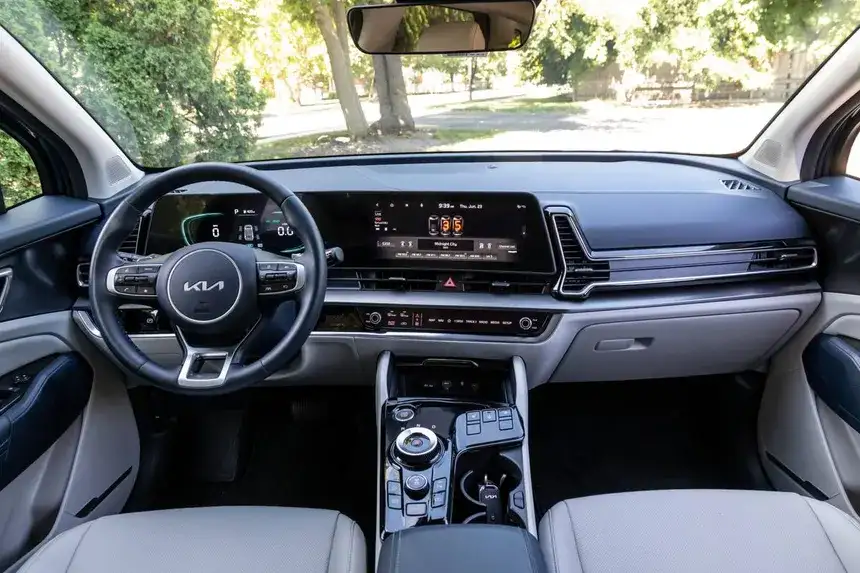
Last month, a Kia Sportage owner came in from Trotwood after noticing he had been filling up noticeably more often over the past several months without any change in his driving routine. He assumed fuel prices had simply shifted his perception and kept driving his normal commute on I-70 and through the Huber Heights surface streets without investigating further. When our technician completed a full inspection, the engine air filter was completely blocked, the tire pressure was averaging seven PSI below specification across all four corners, and the spark plugs were original at 68,000 miles with visible electrode wear. The three-item catch-up service that addressed everything? $310. Twelve months of staying current on each item individually as they came due? $180.
That $130 gap understates the real cost, because the degraded fuel economy had been running silently in the background for months before the Trotwood owner noticed. Across six months of underperforming combustion efficiency and rolling resistance from underinflated tires on a daily Dayton commute, the additional fuel cost alone likely exceeded the difference between the catch-up service and the proactive one.
Fuel economy losses are almost never dramatic. They arrive gradually, one small efficiency drain at a time, until the cumulative effect shows up as a fill-up frequency that feels slightly off from what the owner remembers. By then, multiple contributing factors have usually been running simultaneously long enough that separating their individual contributions requires a full inspection rather than a simple fix.
Greater Dayton drivers face a specific set of fuel economy challenges that combine seasonal factors, driving pattern realities, and maintenance timing in ways worth understanding as a complete picture. The stop-and-go congestion on I-70, US-35, and Old Troy Pike, the cold-start frequency of Ohio winters, and the temperature swings between January and July all affect fuel economy in measurable ways. Understanding which factors are within your control and which require a service appointment is what this guide is built around.
Why Dayton-Area Driving Conditions Affect Fuel Economy More Than You Expect
The EPA fuel economy figures on your Kia’s window sticker are measured under controlled test conditions that don’t resemble what a Huber Heights commuter actually experiences on a daily basis. The test protocol uses a specific drive cycle with moderate acceleration, consistent speeds, and controlled temperature conditions. It doesn’t account for the backup at the I-70 and I-75 interchange, the repeated cold starts of an Ohio winter commute, or the extended idle time that stop-and-go traffic on Brandt Pike produces during morning rush.
The result is a gap between the window sticker number and real-world experience that most Dayton-area Kia owners accept as inevitable. Some of that gap is genuinely unavoidable given local driving conditions. But a meaningful portion of it is recoverable through maintenance and driving habit adjustments that cost little and return real dollars at the pump.
The Cold Start Fuel Economy Penalty
Every time your Kia’s engine starts cold, it runs a rich fuel mixture for the first several minutes of operation while the engine management system waits for the oxygen sensors and catalytic converter to reach operating temperature. During this warm-up period, fuel economy is significantly lower than at operating temperature, often by 20 to 40 percent depending on ambient temperature and trip length.
For Huber Heights drivers who make multiple short trips through Vandalia, Englewood, and the Old Troy Pike corridor in a day, the proportion of total driving time spent in the cold-start rich-running condition is considerably higher than for a driver who makes one long highway commute. Each cold start begins a warm-up cycle that costs fuel, and a daily driving pattern of three short trips costs three warm-up cycles rather than one.
The practical implication is that combining errands into fewer, longer trips has a direct and measurable fuel economy benefit that costs nothing and requires only planning rather than a service appointment. A Kia that makes one 20-minute errand run recovers its fuel economy for 15 of those minutes. A Kia that makes four 5-minute errand runs never fully recovers from the initial cold-start penalty on any of them.
The Stop-and-Go Consumption Reality on I-70 and US-35
Kinetic energy is the resource that fuel economy is fundamentally about. Every time your Kia accelerates to traffic speed and then brakes to a stop, the kinetic energy built through acceleration is converted to heat in the brake system and lost. The fuel that created that kinetic energy cannot be recovered from a conventional drivetrain. The more frequently this cycle repeats, the lower the effective fuel economy regardless of how efficiently the engine operates between stop events.
The I-70 and I-75 interchange backup, the congestion on US-35 through Beavercreek and Fairborn, and the surface street traffic density around the Huber Heights and Vandalia commercial corridors create exactly this high-frequency stop-and-go pattern for a significant portion of Greater Dayton Kia owners. Drivers who can shift even a portion of their commute to less congested timing or routes recover fuel economy that no maintenance service can replicate.
For Kia Sportage, Sorento, and Telluride hybrid owners, regenerative braking partially recovers the kinetic energy from deceleration events, which is why hybrid fuel economy advantages are most pronounced in precisely the stop-and-go conditions that are most prevalent in Greater Dayton commuting.
The Maintenance Items That Directly Affect Fuel Economy
While driving habits address the behavioral side of fuel economy, maintenance condition addresses the mechanical side. Several specific service items have a direct and measurable effect on how efficiently your Kia converts fuel into forward motion, and all of them are straightforward to stay current on with a clear service calendar.
Tire Pressure: The Most Underestimated Fuel Economy Factor
Underinflated tires increase rolling resistance, which is the force your engine must overcome to keep the vehicle moving at any given speed. The relationship is direct and consistent: every PSI below specification increases rolling resistance meaningfully, and across four underinflated tires that effect multiplies into a fuel economy impact that shows up at the pump over time.
Ohio’s seasonal temperature swings compound this for Huber Heights drivers in a specific way. Tire pressure drops approximately one PSI for every 10-degree decrease in ambient temperature, which means tires set correctly in September can be six to eight PSI underinflated by a February morning in Huber Heights where overnight temperatures have been in the single digits. A vehicle that enters winter correctly inflated and is never checked through the cold months arrives in spring with a measurable rolling resistance increase that has been costing fuel economy since November.
Checking tire pressure monthly and correcting to the placard specification on the driver’s door jamb is the highest return-on-time fuel economy action available to any Kia owner. It costs nothing beyond two minutes and a gauge and recovers the rolling resistance loss that underinflation accumulates silently through seasonal temperature changes.
A Kia Telluride owner from Vandalia came in last November for a routine rotation and mentioned her fuel economy had been consistently below the window sticker figure since she bought the vehicle the previous spring. Tire pressure was averaging five PSI low across all four corners, a condition that had likely existed since her first Ohio autumn. Correcting the pressure alongside the rotation produced a measurable fuel economy improvement that she noticed within the first two tanks. The tire rotation and pressure correction cost $55. The fuel economy recovery, estimated at 0.3 to 0.5 MPG sustained, represented $80 to $120 in annual fuel savings on her typical driving volume.
Engine Air Filter: The Airflow Factor
Your Kia’s engine requires a precise ratio of air to fuel for efficient combustion. The engine air filter is the last barrier between the ambient atmosphere and your engine’s intake system, and a filter that has accumulated enough debris to restrict airflow disrupts the air-to-fuel ratio that the engine management system is calibrated around.
A partially blocked engine air filter doesn’t cause an immediate dramatic fuel economy drop. It causes a gradual, progressive efficiency reduction as the filter loads further over time, which is exactly why it’s easy to miss. The engine management system compensates for reduced airflow by adjusting fuel trim, but those adjustments have limits, and a severely blocked filter pushes the system outside the range where compensation maintains normal efficiency.
Kia recommends engine air filter inspection at every service visit and replacement at 30,000 miles under normal conditions, with more frequent attention warranted in elevated dust environments. The Old Troy Pike industrial corridor, the agricultural areas south of Huber Heights, and the construction zone particulate that Greater Dayton has been generating through years of active development all represent elevated particulate environments that can accelerate filter loading beyond the standard interval assumption. Filter replacement runs $40 to $60 and restores the intake airflow that efficient combustion depends on. 🔧
Spark Plug Condition and Combustion Efficiency
Spark plugs are the ignition source for every combustion event in your Kia’s engine, and worn spark plugs require higher voltage to fire and produce a less complete combustion event than fresh plugs operating within their designed gap specification. Incomplete combustion means unburned fuel leaving the cylinder, which is both a fuel economy loss and a source of the hydrocarbon emissions that Ohio’s air quality standards are designed to limit.
Kia’s iridium spark plugs are specified for 60,000-mile replacement intervals under normal conditions, and most Kia owners make it to that interval without noticing a clear symptom because plug wear is gradual. The fuel economy reduction from plugs at 55,000 to 60,000 miles is real but subtle, and it typically shows up as a slightly elevated fill-up frequency rather than a noticeable performance change.
Staying on the 60,000-mile spark plug replacement schedule rather than extending it preserves combustion efficiency through the full useful life of each set and prevents the cumulative fuel economy loss that worn plugs produce through the back half of their service life. Replacement runs $120 to $180 depending on your Kia model and engine configuration.
Oxygen Sensor and Fuel System Health
The oxygen sensors in your Kia’s exhaust system provide the real-time feedback that the engine management system uses to maintain the correct air-to-fuel ratio across all driving conditions. A degraded oxygen sensor provides inaccurate feedback, causing the engine management system to run a mixture that is richer or leaner than optimal and reducing combustion efficiency in either direction.
Oxygen sensor degradation is gradual and doesn’t always trigger a check engine light in its early stages, which means a sensor that is affecting fuel economy may not be producing a dashboard alert that prompts action. If your Kia’s fuel economy has declined noticeably and tire pressure, air filter, and spark plug condition have all been confirmed as current, an oxygen sensor diagnostic is the logical next step. 🔧
Driving Habits That Recover Fuel Economy Without a Service Appointment
Beyond maintenance, several driving habit adjustments deliver measurable fuel economy improvements that require nothing more than awareness and a small behavioral shift on the roads you’re already driving.
Smooth, progressive acceleration from stops on Old Troy Pike and Brandt Pike recovers fuel economy that aggressive acceleration from every stoplight loses. The fuel cost of going from zero to 40 mph in four seconds versus eight seconds is real and cumulative across a full commute week. The traffic arrival time difference is usually measured in seconds.
Highway speed management matters more than most drivers realize. Aerodynamic drag increases with the square of velocity, meaning the fuel required to maintain 75 mph on I-70 is meaningfully higher than what’s required at 65 mph. For Huber Heights drivers with regular I-70 or I-75 commute segments, a modest speed reduction recovers fuel economy that no maintenance service can replicate at any cost.
Reducing unnecessary idling, particularly the extended warm-up idling that many Ohio drivers practice during cold weather, recovers fuel economy that idling burns without contributing to any forward progress. Modern Kia engines reach operating temperature faster through light driving than through stationary idling, and the fuel consumed during a five-minute stationary warm-up on a Huber Heights winter morning represents a direct fuel economy loss with no compensating benefit.
“The fuel economy conversations I have most often start with owners who have been waiting for a clear cause to identify itself,” says Marcus Webb, Lead Kia Service Advisor at the Old Troy Pike location. “Fuel economy rarely drops from one obvious thing. It’s usually three or four small factors running simultaneously for several months. A full inspection that checks tire pressure, air filter, spark plugs, and fuel trim data in one visit finds the whole picture at once rather than chasing one factor at a time.”
Your 30-Day Fuel Economy Recovery Plan
This week: Check all four tire pressures with a quality gauge before your first drive of the morning, when the tires are cold. Compare each reading to the specification on the driver’s door jamb placard. If any tire is more than two PSI below specification, correct it before your next drive. If all four are consistently low, that pattern points to gradual seasonal pressure loss and is resolved with a straightforward inflation correction that you’ll feel in your fuel economy within the first tank.
Within two weeks: Pull your service records and identify the last time your engine air filter and spark plugs were replaced and compare those dates and mileages to Kia’s recommended intervals for your specific model. If either item is within 5,000 miles of its replacement interval or you can’t confirm when it was last done, schedule a service appointment at the Old Troy Pike location that bundles both items with a fuel system inspection. Addressing them together is more efficient than two separate visits and gives you a clean baseline for the next service cycle.
By month’s end: Spend one week implementing the three driving habit adjustments discussed above: smoother acceleration from stops, a five mph reduction on your regular I-70 or I-75 segments, and eliminating stationary warm-up idling beyond 30 seconds. Track your fuel economy over two full tanks before and after the change. The difference in fill-up frequency on a regular Greater Dayton driving volume is usually detectable within two tanks and gives you a clear sense of how much of your current fuel economy gap is behavioral versus mechanical.
These three steps take less than an hour of your actual time across the month and address both the maintenance and behavioral dimensions of fuel economy simultaneously rather than chasing one factor while the others continue running in the background.
Fuel economy is one of those ownership dimensions where small factors compound into meaningful dollars across a full year of Huber Heights driving. The maintenance items are straightforward to stay current on. The driving habits are straightforward to adjust. The combination of both, addressed at the same time, produces the most complete and durable fuel economy recovery available to any Kia owner in Greater Dayton.
Schedule Your Fuel Economy Inspection Today
The Trotwood Sportage owner from the opening came back six months after his catch-up service with all three items current, his tire pressure on a monthly check schedule, and his fuel economy tracking measurably better than it had been before his inspection. He estimated the improvement at roughly half a tank per month on his regular driving volume, a recovery that more than offset the cost of the service that revealed the problem.
At Kia of Dayton, our certified technicians perform comprehensive fuel economy inspections that check every mechanical factor affecting how efficiently your Kia converts fuel into forward motion. Whether you’ve noticed a gradual fill-up frequency increase, have a specific maintenance item you know is overdue, or simply want a complete picture of your vehicle’s current efficiency baseline heading into the driving season ahead, we’ll give you an honest assessment and a clear service plan.
Schedule your fuel economy inspection today by contacting our service department or booking online. You’ll find us at 8560 Old Troy Pike, Huber Heights, OH 45424.
Proper fuel system maintenance combined with the right driving habits protects your fuel budget, reduces the environmental impact of every mile driven, and ensures your Kia delivers the efficiency it was engineered to provide across every season of Greater Dayton driving ahead. That is what informed Kia ownership looks like.

0 comment(s) so far on How to Improve Gas Mileage in Your Kia This Season