


Restoring Lost Horsepower: Removing GDI Carbon Build-Up on Kia Optima & Sportage Engines
Key Takeaways
- Direct injection changes how deposits form: In a GDI engine, fuel is sprayed straight into the cylinder, so it no longer washes over the intake valves and carbon can accumulate there over time.
- Symptoms creep in slowly: Rough idle, hesitation, reduced power, and falling fuel economy often develop gradually, which makes them easy to blame on age or weather.
- Cleaning can restore lost performance: A professional intake valve and port cleaning removes baked-on deposits and helps the engine breathe and burn fuel the way it was designed to.
- Prevention is cheaper than repair: Regular oil changes, quality fuel, and timely inspections slow carbon formation and help you avoid misfires and more involved repairs.
Your Kia used to jump away from the light at Old Troy Pike and merge onto I-70 without a second thought. Now it hesitates, idles a little rough, and seems thirstier at every fill-up. You have not changed how you drive, so something inside the engine has changed. Cleaning carbon from your intake valves costs a fraction of what chasing misfires, replacing parts that were never the problem, and living with a sluggish engine will cost you over time. Understanding why gasoline direct injection engines collect carbon, and what a proper cleaning involves, is the first step toward getting your Kia’s power back.
Why GDI Engines Collect Carbon
Gasoline direct injection, commonly called GDI, is used across many Kia engines, including numerous Optima and Sportage powertrains. Instead of spraying fuel into the intake port, where it mixes with air before entering the cylinder, a GDI injector delivers fuel at very high pressure directly into the combustion chamber. The benefits are real: better efficiency, stronger low-end torque, and tighter control over combustion.
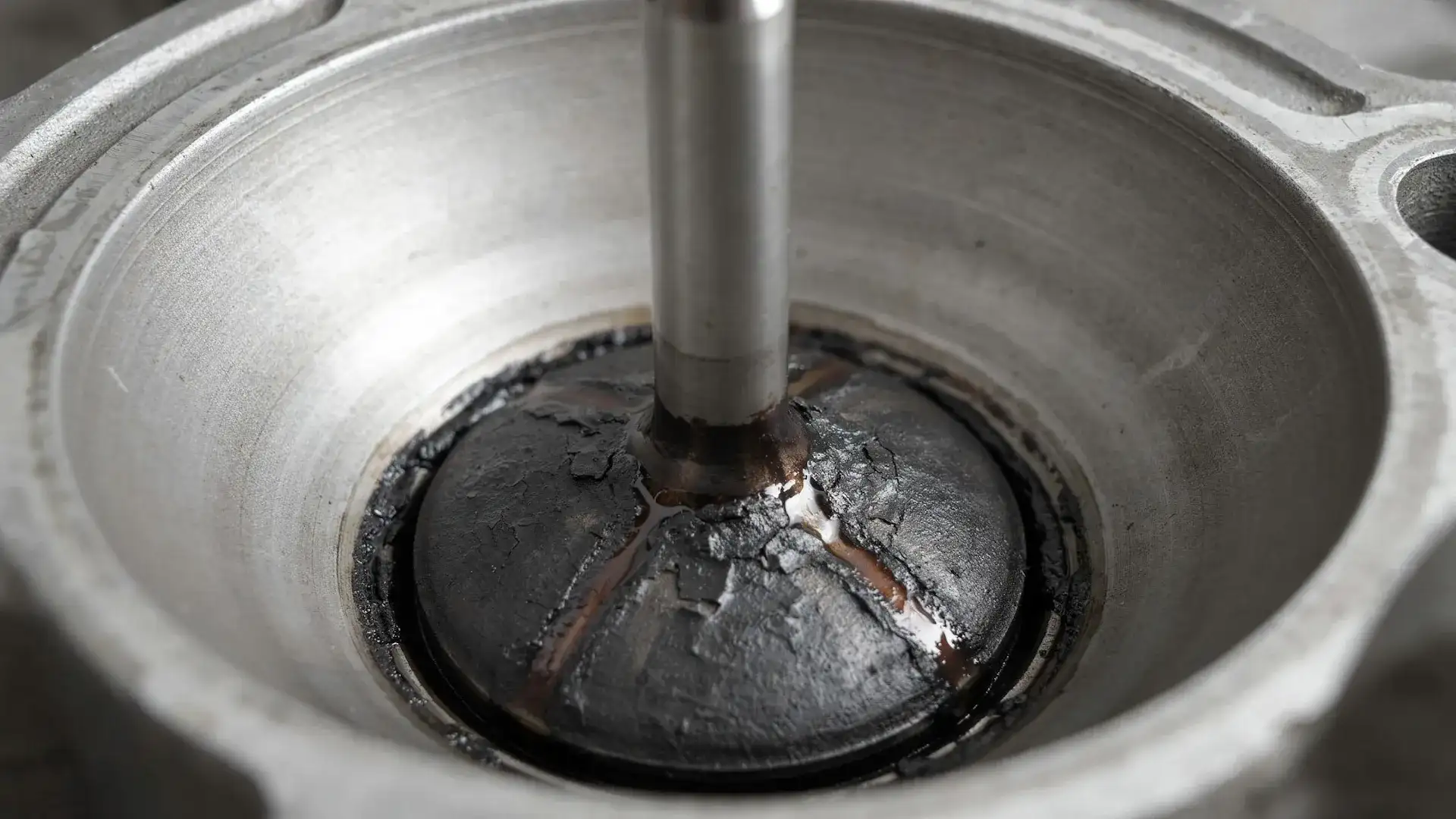
The tradeoff is what happens to the intake valves. In older port-injected engines, fuel spray constantly washed across the back of the valves and acted as a built-in cleaner. With direct injection, that cleaning effect is gone. The valves are exposed only to air and to whatever vapors travel through the intake tract.
Where the Carbon Actually Comes From
The main source is the engine’s crankcase ventilation system. As the engine runs, small amounts of combustion gases slip past the piston rings and into the crankcase. To keep pressure from building, those gases, which carry oil vapor and fine droplets, are routed back into the intake so they can be burned. That is the job of the positive crankcase ventilation system, and it is working exactly as engineered.
The oil vapor, however, lands on the hot intake valve stems and the backs of the valves. With no fuel spray to rinse it away, the oil bakes into a hard, dark deposit layer after layer. Over tens of thousands of miles, that crust thickens, disturbs airflow into the cylinder, and can even prevent a valve from sealing perfectly. Short trips, extended idling, and stretched oil change intervals tend to speed up the process.
Signs Your Optima or Sportage May Have Carbon Build-Up
Deposits do not appear overnight, and the symptoms usually build quietly. Here are the signs worth paying attention to:
- A rough or uneven idle, especially right after a cold start
- Hesitation or flat spots when accelerating onto the highway
- A noticeable loss of power compared to when the vehicle was newer
- Gradually worsening fuel economy without any change in driving habits
- Misfire codes or a check engine light with no obvious failed part
- A slightly shaky feel at stoplights or while crawling through traffic
These symptoms overlap with spark plug wear, ignition coil trouble, and fuel system problems, so it pays to confirm the cause before spending money. A scan of stored codes and a visual inspection can tell a technician a great deal about what is happening inside.
How Drive Habits in Huber Heights Affect Deposits
Where and how you drive plays a bigger role than most owners realize. Daily routes around Huber Heights often mix short hops along Brandt Pike and Old Troy Pike with stop-and-go traffic toward Dayton and Wright-Patterson Air Force Base. Engines that rarely reach full operating temperature for long periods tend to produce more crankcase vapor and burn it less completely.
Winter makes this more pronounced. Cold Miami Valley mornings mean longer warm-up times and richer fuel mixtures, and a cold engine is less efficient at managing oil vapor. A steady highway run on I-75 or I-70 helps the engine reach temperature and burn off some residue, but it does not remove carbon that has already hardened onto the valves. Once deposits are baked in, they need to be physically cleaned.
What Happens to Performance as Deposits Grow
Think of an intake valve as a doorway for air. As carbon builds on the valve and the port wall, the opening narrows and the airflow becomes uneven from cylinder to cylinder. The engine’s computer tries to compensate, but it can only adjust so much. The air and fuel mixture drifts away from ideal, combustion becomes less consistent, and you feel it as hesitation and reduced power.
In more advanced cases, heavy deposits can absorb fuel and release it unpredictably, causing misfires and a rough start. Carbon can also hold a valve slightly off its seat, reducing compression and efficiency in that cylinder. Over time, misfires can stress ignition components and can send unburned fuel into the exhaust, which is hard on the catalytic converter. This is why dealing with deposits early protects more than just performance.
How a Professional Carbon Cleaning Works
Because fuel does not reach the intake valves in a GDI engine, simply adding a bottle of fuel additive to the tank generally cannot clean them. Additives can help keep injectors and combustion chambers cleaner, but they do not flow across the intake valves in the same way port fuel once did.
A professional service targets the deposits directly. Depending on the severity and the equipment used, technicians may use a chemical intake cleaning process that introduces a cleaning agent through the intake while the engine runs, or a more thorough approach that involves accessing the intake ports and removing hardened carbon with specialized media or tools. After cleaning, a technician will typically recheck idle quality, review for stored codes, and confirm the engine is running smoothly. If you want to learn more about the work performed, the Kia of Dayton service center can explain which approach suits your vehicle and mileage.
What the Service Costs Compared to Doing Nothing
Costs vary based on the engine, the level of buildup, and the method used, but the comparison is straightforward:
- Early inspection and diagnosis: A modest cost that confirms whether deposits, ignition parts, or fuel delivery are behind the symptoms
- Intake valve and port cleaning: A mid-range service that restores airflow and often brings back smoother idle and stronger throttle response
- Ignoring the problem: Ongoing fuel economy losses, possible misfires, and wear on spark plugs, coils, and emissions components
- Replacing parts without a diagnosis: Money spent on components that may never have been the real cause
Addressing deposits at the first sign of symptoms usually keeps the repair on the lower end of that scale.
Keeping Carbon from Coming Back
No maintenance routine can eliminate crankcase vapor, but good habits slow the buildup considerably. Change your oil on schedule using the grade and specification Kia recommends, since oil that breaks down faster tends to produce more vapor and deposits. Choose quality fuel from reputable stations, and follow the maintenance schedule in your owner’s manual. For a broader look at how engine efficiency is tied to fuel and maintenance, the U.S. Department of Energy’s fueleconomy.gov offers helpful, practical guidance.
It also helps to give your engine regular, full warm-up drives instead of relying only on short trips. Keep the PCV system, air filter, and spark plugs in good condition, and use genuine replacement components when parts are needed. You can find what your Kia requires through the Kia of Dayton parts center, where parts are matched to your specific Optima or Sportage.
Getting Your Kia’s Power Back
If your Optima or Sportage has lost its pep, idles roughly, or burns more fuel than it should, do not assume it is just age. Carbon build-up is a well-understood result of direct injection design, and it is something a trained technician can identify and correct. Start by scheduling service online so your vehicle can be inspected and the real cause pinpointed. Whether you drive in from Huber Heights, Vandalia, Riverside, or anywhere across the Miami Valley, Kia of Dayton, located at 8560 Old Troy Pike, Huber Heights, OH 45424, United States, is ready to help restore your engine’s performance and keep your Kia running the way it was built to.
0 comment(s) so far on Restoring Lost Horsepower: Removing GDI Carbon Build-Up on Kia Optima & Sportage Engines