

Signs Your Kia Needs Brake, Battery, or Alignment Service
Last month, a Sportage owner from Vandalia ignored her dashboard brake warning light for three weeks, assuming it was “just a sensor issue” that wasn’t urgent. She continued her daily commute to Dayton until one morning her brake pedal went to the floor in her driveway—complete brake system failure from critically low fluid that the warning light had been indicating. Emergency brake repair with towing cost $1,850. The brake inspection she postponed? $75 and would have identified a minor brake line leak requiring a $240 repair before it progressed to complete system failure.
If you’re driving a Kia in the Huber Heights area—whether it’s commuting down I-75 to Dayton, navigating Old Troy Pike to local shopping, or traveling Route 202 toward Englewood—your vehicle constantly communicates its condition through various signs and symptoms. Brakes, battery, and alignment are three critical systems that develop recognizable warning signs long before complete failure occurs. Learning to recognize these signals and respond appropriately prevents the dangerous situations and expensive repairs that result when minor problems progress to major failures.
Many Kia owners dismiss early warning signs as minor annoyances they’ll “deal with eventually,” or they misinterpret symptoms as normal vehicle characteristics. A slight pull during braking becomes “just how it drives.” A clicking sound when starting becomes “normal for this car.” Uneven tire wear becomes “I guess these tires just don’t last long.” Each of these interpretations ignores problems that worsen over time and cost substantially more to repair after delay.
Understanding what symptoms mean, why they matter, and when they require immediate attention versus routine scheduling helps you maintain your Kia safely while avoiding the emergency repairs that drain your budget unexpectedly. Let’s explore the critical warning signs for brakes, battery, and alignment—three systems that affect safety, reliability, and ownership costs significantly.
Brake Warning Signs You Should Never Ignore
Your Kia’s brake system provides numerous warning signals when service is needed, ranging from subtle hints to urgent alerts demanding immediate attention.
Dashboard warning lights are your first and most obvious indicators:
Red brake system warning light: This serious warning indicates critical brake system problems—low brake fluid, significant fluid loss, parking brake engaged, or brake system malfunction. Never ignore this light. If it illuminates while driving, find a safe place to stop immediately and have the vehicle towed to service. Continuing to drive with this warning risks complete brake failure.
ABS warning light (amber): Anti-lock brake system malfunction is indicated by the amber ABS light. While your regular brakes still function, you’ve lost ABS assistance preventing wheel lockup during emergency stops. Schedule service promptly—don’t defer ABS repairs as you need this safety system functioning.
Brake pad wear indicator light: Some Kia models include electronic brake pad wear sensors triggering a dedicated warning when pads reach minimum thickness. This is an early warning providing 1,000-2,000 miles to schedule service before damage occurs.
Squealing or squeaking noises during braking indicate wear indicators (small metal tabs on brake pads) contacting the rotors. This high-pitched sound is intentionally designed to warn you that pads are approaching minimum thickness. You have approximately 1,000-2,000 miles before pads wear completely—schedule service within the next week or two.
Don’t dismiss brake squealing as “normal” or assume it will go away. It won’t—it indicates genuine wear requiring service. The squealing will progress to grinding if ignored, causing expensive rotor damage.
Grinding or scraping sounds mean brake pads have worn completely through their friction material and the metal backing plates are grinding against rotors. This metal-on-metal contact damages rotors rapidly, turning a $280-350 brake pad replacement into a $550-700 pad and rotor service.
Grinding brakes also provide dramatically reduced stopping power—you’re braking on metal rather than proper friction material. This is dangerous. Stop driving immediately and have the vehicle towed to avoid accidents and prevent additional rotor damage that accumulates with every mile.
Vibration or pulsation felt through the brake pedal or steering wheel during braking indicates warped rotors or uneven brake pad deposits. Rotors can warp from overheating (extended downhill braking, aggressive driving) or from uneven cooling (sitting with hot brakes while holding brake pedal pressure).
Brake vibration worsens rapidly once it starts. The initial subtle pulsation becomes severe shaking within a few thousand miles. Address brake vibration promptly before it progresses—replacement costs remain the same whether you fix it early or late, but your safety and driving experience degrade while you wait.
Soft or spongy brake pedal that sinks toward the floor indicates air in brake lines, low brake fluid, or internal brake system problems. This symptom severely compromises braking effectiveness. Have the vehicle towed to service—don’t attempt to drive with compromised brake pedal feel.
Pulling to one side during braking means braking force isn’t equal on both sides. Possible causes include:
- Seized caliper on one side (one brake isn’t working)
- Contaminated brake pad (oil or grease on pad surface)
- Collapsed brake hose restricting fluid flow
- Significantly different pad wear side-to-side
Brake pull creates dangerous situations during emergency stops when vehicle doesn’t track straight. Schedule diagnosis and repair immediately—don’t adapt your driving to compensate for brake pull.
Brake pedal feels too firm or requires excessive pressure suggests brake booster failure (power assist isn’t working) or hydraulic system problems. Without proper assist, stopping requires significant leg force. This is particularly dangerous in emergency situations where immediate, strong braking is needed. Address this symptom immediately.
Burning smell after braking or hot wheels after driving indicate brakes dragging (not fully releasing). This overheats brake components, warps rotors, and can cause brake fade or fire in extreme cases. Possible causes include seized calipers, parking brake not releasing, or hydraulic problems. Service immediately before you experience brake fade or component failure.
A customer from Vandalia noticed a slight grinding sound during braking but continued driving for two weeks while “finding time” to schedule service. When she finally brought her Sorento in, both front rotors were grooved beyond resurfacing limits, requiring replacement. The delay turned a $320 pad replacement into a $680 pad and rotor service. “I thought the noise was just dirt or something,” she said. “I didn’t realize I was destroying my rotors every time I braked.” The two-week delay cost her an additional $360.
“Brake warning signs are progressive—they start subtle and become obvious,” says Robert Mitchell, Lead Brake Technician at the Old Troy Pike location. “The squealing you ignore today becomes grinding tomorrow. The slight pulsation you dismiss becomes severe shaking next month. Every brake symptom worsens with time because the underlying problem continues operating under stress. We see customers who delayed service turn $300 repairs into $800 repairs routinely. The most expensive brake service is the one you postpone.”
Battery Warning Signs and Failure Symptoms
Your Kia’s battery provides starting power and electrical system support, and it gives clear warnings before complete failure.
Slow or labored engine cranking during starting is the most common battery warning sign. If your engine cranks slower than usual or takes longer to start, the battery is weakening. This symptom worsens in cold weather when battery capacity decreases and engine oil thickens, requiring more power to start.
Don’t dismiss slow cranking as “normal for cold weather.” While cold affects battery performance, your battery should start the engine promptly even on the coldest Ohio mornings. Slow cranking indicates the battery can’t provide adequate cranking amps and will fail soon.
Clicking sound when turning the key without engine cranking indicates insufficient power to engage the starter motor. This is advanced battery weakness—failure is imminent, likely within days or weeks. Don’t ignore clicking starts hoping they’ll improve. Replace the battery immediately before you’re stranded.
Electrical accessories dimming when starting the engine or dimming progressively while driving suggest battery or charging system problems. Dashboard lights dimming during cranking indicate weak battery. Lights dimming while driving with engine running suggest alternator isn’t charging properly—a different but related problem.
Dashboard battery warning light illuminates when the charging system malfunctions. This doesn’t necessarily mean the battery itself has failed—it indicates the alternator isn’t charging, battery voltage is low, or charging system connections are faulty. Have the charging system tested immediately. Driving with the battery light on drains the battery until the vehicle stalls from electrical system failure.
Electrical system malfunctions: Random electrical gremlins like intermittent power windows, flickering lights, radio resets, or erratic gauge readings can indicate battery problems. Weak batteries provide inconsistent voltage causing electrical components to behave unpredictably.
Corroded battery terminals visible as white, green, or blue crusty buildup on battery posts or cable connections impede electrical flow. Severe corrosion can prevent starting despite a good battery. Regular terminal cleaning (every 6-12 months) prevents corrosion-related starting problems.
Swollen or bloated battery case indicates internal damage from overcharging or extreme heat. A swollen battery has failed and must be replaced immediately—continued use risks rupture and acid leakage.
Age-related failure: Batteries have finite lifespans. In Ohio’s temperature extremes, battery life averages 3-5 years. A battery approaching its fourth year should be tested annually and replaced proactively before it fails unexpectedly.
Battery testing is simple, free at most auto parts stores, and takes five minutes. Tests measure cold cranking amps and compare to the battery’s rated capacity. Results show battery health as percentage of original capacity:
- 100-90%: Healthy battery, no action needed
- 89-75%: Marginal battery, test again in 3-6 months
- Below 75%: Weak battery, replace soon
- Below 60%: Failed battery, replace immediately
Don’t wait until you’re stranded to address battery warnings. Proactive replacement costs the same as emergency replacement but happens at your convenience rather than in a parking lot or driveway at the worst possible time.
Seasonal considerations for Ohio: Battery problems peak during extreme temperatures. Winter’s cold reduces battery capacity by 30-50% while increasing starting power requirements from thick oil. Summer heat accelerates chemical reactions inside batteries, causing internal degradation. Test batteries in fall before winter and replace marginal batteries rather than gambling through cold weather.
A customer from Huber Heights experienced intermittent slow starting for three weeks during February but kept dismissing it as “just the cold.” One morning, the clicking sound meant no start at all. Emergency mobile battery replacement at his driveway cost $245—$60 more than our in-shop replacement would have cost, plus the stress and inconvenience of being stranded. “I knew the battery was weak,” he admitted, “but I kept hoping it would last through winter. That hope cost me an extra $60 and a morning of stress.”
Alignment Warning Signs and Tire Wear Patterns
Wheel alignment problems create distinctive symptoms that many drivers misinterpret or ignore until significant tire damage occurs.
Vehicle pulls or drifts to one side on straight, level roads with hands lightly on the steering wheel. This is the most obvious alignment symptom. Test on multiple roads to eliminate road crown (pavement slope for water drainage) as a factor. Consistent pull in one direction regardless of which side of the road you’re driving indicates alignment problems.
Some pulling is normal on crowned roads—vehicles naturally drift toward the road’s lower edge. But if your Kia pulls right on a road crowned right AND pulls right on a road crowned left, alignment is definitely out of specification.
Steering wheel off-center when driving straight indicates toe misalignment. The front wheels point straight but required steering input to get them there, leaving the steering wheel rotated slightly left or right. This is a clear alignment indicator even if the vehicle doesn’t pull.
Off-center steering bothers some drivers immediately while others adapt to it unconsciously. Don’t adapt—fix the alignment causing it.
Steering feels loose or vague with delayed response to steering inputs. Proper alignment creates precise steering response. When alignment drifts out of specification, steering can feel disconnected or require larger inputs to generate expected response. While this can also indicate worn steering or suspension components, alignment is often a contributing factor.
Uneven tire wear patterns are definitive alignment evidence:
Inside or outside edge wear: One edge of the tread (inside or outside) wears significantly faster than the center or opposite edge. This indicates camber or toe problems. Measure tread depth at inside edge, center, and outside edge—differences exceeding 2/32 inch suggest alignment issues.
Edge wear develops over thousands of miles and indicates chronic misalignment. By the time edge wear is obvious, you’ve already lost considerable tire life that can’t be recovered. This is why proactive alignment checking matters—catch problems before significant tire damage occurs.
Feathering: Running your hand across the tread, you feel sharp edges on one side of each tread block and rounded edges on the other, creating a saw-tooth feel. This distinctive pattern indicates toe misalignment and can develop relatively quickly—within 3,000-5,000 miles of significant toe problems.
Center wear or both edge wear: These patterns typically indicate tire pressure problems rather than alignment. Center wear suggests chronic over-inflation; both edge wear indicates chronic under-inflation. However, these can coexist with alignment issues, so check pressure first, then verify alignment.
Rapid tire wear: Tires wearing significantly faster than expected (reaching replacement limits at 25,000 miles versus expected 50,000 miles) often indicate alignment problems, improper pressure, or aggressive driving style. Track your tire life—if you’re replacing tires every 20,000-30,000 miles, something is wrong.
Vibration at highway speeds can indicate alignment problems, though it’s more commonly caused by wheel balance issues or tire defects. If vibration occurs alongside other alignment symptoms, have alignment checked as part of diagnosis.
After hitting potholes or curbs, schedule alignment verification even without obvious symptoms. A single significant impact can knock alignment out of specification immediately, starting tire wear that continues until you address it.
Ohio’s spring potholes from freeze-thaw damage create constant alignment risks. After harsh winters, proactive spring alignment checks catch pothole-induced problems before significant tire wear occurs.
Pulling during braking versus pulling while cruising: If your Kia pulls only during braking but tracks straight otherwise, the problem is brake-related (uneven brake force) rather than alignment. However, both problems can coexist. Proper diagnosis differentiates between brake pull and alignment pull.
Steering wheel vibration versus whole-car vibration: Steering wheel vibration at highway speeds typically indicates front wheel balance problems or front-end alignment issues. Whole-vehicle vibration felt through the seat suggests rear wheel problems. Location of vibration helps identify which end needs attention.
A customer from Englewood hit a significant pothole on North Main Street but didn’t think much of it—no visible damage, vehicle seemed fine. Over the next 6,000 miles, his front tires developed severe inside edge wear requiring replacement at 28,000 total miles—less than halfway through expected life. Alignment check revealed 1.4 degrees of toe-out on the left front from the pothole strike. The alignment check immediately after the pothole would have cost $165 and prevented the premature tire wear. Instead, his neglect cost him $340 for premature tire replacement plus $165 for alignment to prevent the problem from recurring. The pothole ultimately cost him $505 versus the $165 if addressed proactively.
When Multiple Symptoms Appear Simultaneously
Sometimes your Kia exhibits symptoms from multiple systems, requiring careful diagnosis to identify root causes versus secondary effects.
Pulling + vibration + uneven tire wear together strongly suggest alignment problems with possible wheel balance issues. The alignment causes pulling and tire wear; uneven wear creates balance problems causing vibration. Address alignment first, then rebalance wheels after solving the primary problem.
Brake noise + pulling during braking indicates brake system problems that might include seized caliper, contaminated pad, or uneven pad wear. Don’t assume this is alignment—it’s brake-specific requiring brake system diagnosis.
Slow starting + dim lights + electrical issues together point to battery or charging system problems. Test battery and alternator together—often one causes the other to fail. A failing alternator undercharges the battery, causing battery failure. A failed battery forces the alternator to work overtime, causing premature alternator failure.
Multiple dashboard warning lights illuminating simultaneously can indicate serious electrical system problems, computer issues, or even just a weak battery causing voltage-sensitive systems to malfunction. Start with battery testing—low voltage causes erratic behavior across multiple systems.
Systematic diagnosis rather than guessing prevents replacing components that weren’t actually failed. Professional diagnosis costs $85-135 but prevents the wasted money from incorrect parts replacement based on symptoms alone.
A customer from Riverside brought her Optima in with multiple symptoms: brake warning light, battery light, and ABS light all illuminated, plus rough idle and electrical gremlins. The scattered symptoms suggested multiple system failures. Our diagnosis revealed a failed alternator causing low voltage. The low voltage triggered all the warning lights, caused rough idle from insufficient spark, and created electrical issues throughout the vehicle. Replacing the alternator ($580) resolved all symptoms immediately. Had she started replacing components based on symptoms without proper diagnosis, she might have replaced the battery, ABS module, or other components unnecessarily before discovering the actual alternator problem.
The Cost of Ignoring Warning Signs
Understanding the financial consequences of delayed service helps justify prompt attention to warning signs.
Brake service delay costs:
Early brake pad replacement: $280-350 front axle Delayed pad replacement with rotor damage: $550-700 front axle Additional cost from delay: $270-350
Complete brake system failure from ignored warning light: $1,200-2,000 including towing, emergency service, and extensive damage Original repair cost if addressed promptly: $180-350 Additional cost from neglect: $850-1,650
Battery neglect costs:
Proactive battery replacement at shop: $160-220 Emergency mobile replacement when stranded: $220-280 Towing if mobile service unavailable: $85-150 Total emergency cost: $305-430 Additional cost versus proactive: $145-210
Plus: Missed work time, stress, potential damage from jump-starts, and risk of being stranded in unsafe locations.
Alignment neglect costs:
Proactive alignment check: $145-195 Premature tire replacement from misalignment: $600-900 for four tires Net cost of neglected alignment: $405-705
Over multiple alignment neglect cycles, costs multiply. Proper alignment every 15,000 miles costs perhaps $600 over 100,000 miles. Neglected alignment requiring premature tire replacement every cycle costs $2,400+ in wasted tire life over the same mileage.
The pattern is clear: Minor problems become expensive repairs when ignored. Warning signs appear early providing opportunities for low-cost intervention. Ignoring warnings allows problems to progress, increasing damage and repair costs exponentially.
Every dollar spent on proactive maintenance based on early warning signs prevents $3-5 in reactive repairs after complete failure. The math unambiguously favors prompt attention to symptoms.
Your 30-Day Warning Sign Response Plan
Taking control of vehicle maintenance starts with three actions responding to current symptoms and preventing future problems.
This week: Perform comprehensive vehicle assessment checking for warning signs. Start engine and listen for slow cranking or clicking. Test brakes on a safe, quiet road noting any noise, vibration, pulling, or pedal feel issues. Drive straight roads at various speeds checking for pull, drift, or vibration. Inspect tires for uneven wear patterns measuring tread depth at multiple points. Check dashboard for any illuminated warning lights. Document everything you find.
If you discover symptoms (brake noise, slow starting, alignment pull, uneven tire wear, warning lights), prioritize by severity:
Immediate attention (schedule this week):
- Red brake warning light
- Grinding brake noise
- Soft/spongy brake pedal
- Clicking when starting
- Multiple warning lights
- Severe tire wear or damage
Prompt attention (schedule within 2-3 weeks):
- Brake squealing
- Slow cranking
- Vehicle pulling
- Off-center steering wheel
- Uneven tire wear developing
- ABS warning light
Routine scheduling (within 1-2 months):
- No symptoms but service overdue
- Preventive alignment check
- Battery nearing age limit
- Seasonal preparation
Within two weeks: For any symptoms identified, schedule professional diagnosis. Don’t guess at problems or attempt DIY repairs on safety-critical systems like brakes. Professional diagnosis costs $85-135 and identifies actual problems versus symptoms. Accurate diagnosis the first time saves money compared to trial-and-error parts replacement.
Bring your symptom notes to your service appointment. Specific details help technicians diagnose efficiently: “Grinding noise from front right wheel during braking, worse when cold, started three days ago” is more helpful than “brakes sound funny.”
By month’s end: Create preventive maintenance calendar based on service intervals even if you have no current symptoms. Set reminders for brake inspection (annually), battery testing (annually after three years old), and alignment checks (every 12-15,000 miles). Preventive calendar helps you catch problems during early warning sign phase rather than after complete failure.
Also establish monthly DIY inspection routine: pressure check tires, visually inspect for obvious problems, test brakes on quiet street, listen for unusual sounds. Monthly familiarity with your Kia’s normal operation helps you recognize when something changes.
These three steps establish response protocols for current symptoms and prevention habits reducing future problems.
Professional Diagnosis vs. DIY Troubleshooting
Understanding when to seek professional help versus when you can diagnose issues yourself prevents wasted time and money.
Always seek professional help for:
Brake system problems: Brakes are life-safety systems where incorrect diagnosis or repair creates accident risk. Even if you’re mechanically inclined, brake diagnosis requires experience recognizing subtle symptoms and understanding complex hydraulic systems. The $85 brake inspection is cheap insurance for correct diagnosis.
Electrical system diagnosis: Modern vehicles’ complex electrical systems with multiple computers, sensors, and networks require professional scan tools and expertise. DIY electrical diagnosis often leads to expensive parts replacement based on guessing rather than actual testing.
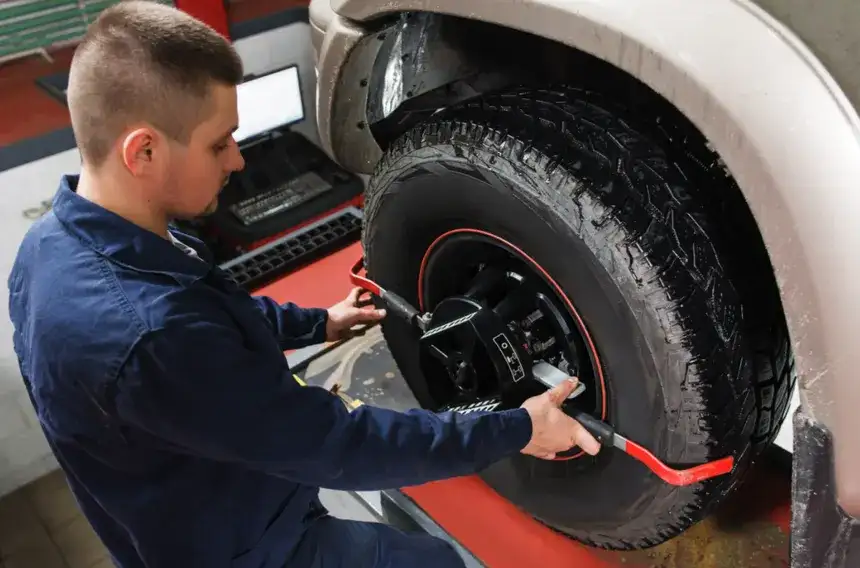
Alignment issues: Alignment requires computerized measurement equipment costing $15,000-25,000. There’s no DIY alignment option. Professional four-wheel alignment costs $145-195 and includes precision measurement and adjustment impossible to replicate at home.
You can DIY:
Battery testing: Most auto parts stores offer free battery testing taking five minutes. This identifies battery condition accurately without professional shop visit.
Basic visual inspection: Checking for obvious damage, fluid leaks, tire condition, and visible wear is straightforward. While you might not diagnose root causes, you can identify that something needs professional attention.
Tire pressure checking: A $20 tire gauge and five minutes monthly prevents problems and costs nothing after initial gauge purchase.
Symptom documentation: Carefully noting when symptoms occur, under what conditions, and how they’re changing helps professional technicians diagnose efficiently, reducing diagnostic time and cost.
The value of professional diagnosis: $85-135 diagnostic fee prevents wasted money on unnecessary parts. Guessing that you need a battery when actually the alternator has failed wastes $180 on a battery that doesn’t solve the problem. Correct diagnosis first time saves money compared to trial-and-error approaches.
A customer from Huber Heights watched YouTube videos and diagnosed his brake noise as “definitely warped rotors needing replacement.” He purchased rotors and brake pads online ($280) and paid an independent mechanic to install them ($220). The noise continued. He brought the vehicle to us for diagnosis. The actual problem was loose brake caliper bolts—a 10-minute repair with no parts cost. His self-diagnosis cost him $500 in unnecessary parts and labor. The $85 professional diagnosis would have identified the actual problem immediately, saving him $415.
Need expert diagnosis of brake, battery, or alignment symptoms? Our service department uses advanced diagnostic equipment and experienced technicians to identify problems accurately the first time.
Schedule Your Diagnostic Service Today
Warning signs from your Kia’s brakes, battery, or alignment shouldn’t be ignored or dismissed. These symptoms indicate developing problems that worsen over time, cost more to repair after delay, and potentially compromise your safety.
Our certified Kia technicians at the Old Troy Pike location have the expertise, equipment, and experience to diagnose symptoms accurately and recommend appropriate repairs. We explain findings clearly, show you what we’ve discovered, and help you prioritize service based on safety and budget.
Schedule your diagnostic appointment today by calling our service department or booking online. Visit us at 8560 Old Troy Pike, Huber Heights, OH 45424, conveniently located just off I-75 with easy access throughout the northern Dayton area.
Don’t ignore warning signs—address them promptly through professional diagnosis and appropriate service. That’s how you maintain safety while managing costs effectively. That’s the confidence expert diagnosis and service delivers.

0 comment(s) so far on Signs Your Kia Needs Brake, Battery, or Alignment Service