


2026 Kia EV9: Dual-Motor e-AWD Maintenance for Rainy Ohio Autumns
Key Takeaways
- Tires Are Your Wet Weather Foundation: Tread depth and correct pressure matter more than ever on a heavy three-row EV on soaked autumn roads.
- Regenerative Braking Can Hide Brake Wear: Pads and rotors may not get used as often, so moisture can cause surface rust that needs inspection.
- e-AWD Still Needs Care: The front and rear motors and their reduction gears follow a maintenance schedule even though there is no engine oil to change.
- Visibility and Seals Protect You: Fresh wiper blades and healthy door seals keep rain out and the view clear.
- Fall Is the Right Time to Inspect: A quick pre-winter service catches small wet weather issues before cold weather arrives.
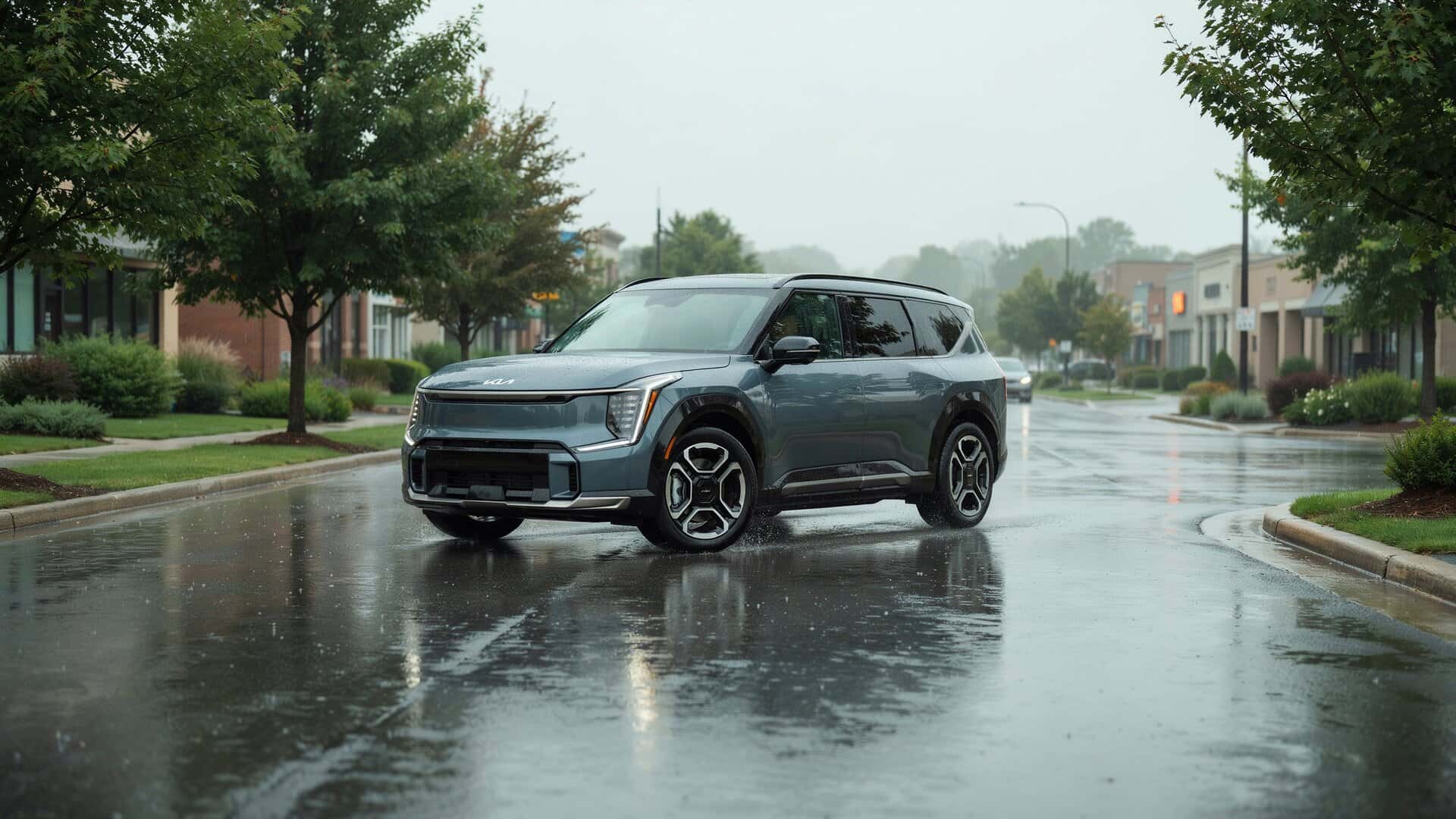
Ohio autumns do not do subtle. One week brings golden leaves along Old Troy Pike, and the next brings days of steady rain that turn the Miami Valley into a mix of slick pavement, standing water, and morning fog. Your 2026 Kia EV9 handles it all with a dual-motor e-AWD system, but wet weather quietly works on tires, brakes, and seals every day. A short fall checkup costs a small amount compared with the repair bills that come from worn tires, corroded brake parts, or water that finds its way where it should not. A little attention now keeps your EV9 sure-footed all season.
Why Rainy Autumns Test an Electric SUV
The Dayton area sits in the Miami Valley, where the Great Miami River and the Mad River shape the land and the weather. When fall storms roll through, low-lying roads can collect water quickly, and fog settles into the valley on cool mornings. Drivers moving along I-75, I-70, and Route 202 often hit heavy spray from trucks and wet leaves piled along the edges of the road.
An EV9 is a heavy vehicle because of its large battery, and its instant electric torque can challenge tires on slick pavement. Checking the National Weather Service forecast for the Dayton area before a long drive and looking at OHGO traffic and road conditions helps you plan around the worst of the weather.
How Dual-Motor e-AWD Works in the Rain
The EV9’s e-AWD system uses an electric motor at each axle, so the front and rear wheels can each receive power as conditions demand. In the AWD versions of the 2026 EV9, the two motors together are rated at 379 horsepower, which gives you strong traction when the road is wet. The system can adjust how much power goes to each axle in real time, which is a real advantage on a damp on-ramp or a leaf-covered street.
Even so, all-wheel drive helps you accelerate, but it does not help you stop or turn any better than your tires allow. That is why tire condition is the most important wet weather item on the whole vehicle. Matching tires on all four corners, even tread wear, and correct inflation make the system work as designed.
Wet Weather Checkpoints for Your EV9
A quick look at the following areas each autumn goes a long way. Many of these can be done at home with a few minutes of attention, and a service team can handle the rest:
- Tire Tread and Pressure: Check tread depth on every tire and compare pressures to the number on the driver’s door jamb label, since cooler fall temperatures lower tire pressure.
- Brake Pads and Rotors: Look for rust or uneven wear, because regenerative braking means the friction brakes may not be used as much and can corrode in damp weather.
- Wiper Blades and Washer Fluid: Replace streaking blades and refill the reservoir, since road spray and fog demand a clear windshield.
- Door and Liftgate Seals: Inspect for cracks or gaps that could allow water into the cabin during heavy rain.
- Charge Port Area: Keep the port and cover clean and free of leaves and debris before plugging in.
Alignment is worth a mention too. If the vehicle pulls to one side or the tires show uneven wear, an alignment check protects your investment in a set of tires.
Brakes in an Electric SUV
Regenerative braking uses the motors to slow the vehicle and recover energy, which is one of the best features of an EV. The side effect is that the traditional brake pads and rotors do less work and can sit unused for long stretches. In damp Ohio weather, that can lead to surface rust on the rotors and sticky calipers.
You can help by making a few firm stops in a safe location from time to time, which cleans the rotor surface. Brake fluid is also worth checking, because it absorbs moisture as it ages, and wet autumns accelerate that process. Have the brakes inspected on the schedule recommended in your owner’s manual or sooner if you hear squealing, grinding, or feel vibration.
Drivetrain, Coolant, and Battery Care
An EV9 does not have engine oil, spark plugs, or a traditional transmission, but it still has systems that need attention. The motors and reduction gears are inspected and serviced according to your maintenance schedule, and the coolant that manages temperatures for the battery and power electronics has its own service interval. The 99.8 kWh battery pack is liquid-cooled, and healthy coolant is part of what protects it.
Cabin air filter service also matters in the fall, when leaf debris and damp air can leave the filter dirty or musty. The 12 volt battery, which powers accessories and starts up the system, should be tested as temperatures drop. Following the schedule in your owner’s manual is the simplest way to stay ahead of these items.
Charging in the Rain
Home and public chargers are designed to work safely in wet weather, and charging in the rain is normal. Still, a few habits help. Keep the connector and charge port free of debris, make sure the connector is fully seated, and avoid charging if the equipment looks damaged or if there is standing water around the unit. Cold, wet weather can also reduce range a little, so plan a little extra charge for longer drives.
If you use a home charger, check that the cable and mounting hardware are in good shape and that the outlet or wall unit is protected from direct water spray. Pre-conditioning the cabin while plugged in is another useful trick, since it warms the vehicle without using battery range.
Driving Smart in the Wet
Slow down on wet pavement, leave extra following distance, and be cautious when you see standing water on the road. Never drive through flooded roadways, since depth is hard to judge and even a short drive through deep water can cause serious damage. Use your headlights in rain and fog, and clear leaves from the base of the windshield and cowl so water can drain properly.
If your vehicle displays a warning light or message, do not ignore it. Many wet weather problems show up as small warnings first, and a prompt inspection usually costs far less than waiting.
What Autumn Care Typically Costs
Pricing depends on the trim, mileage, and services needed, so treat this as a general picture and not a quote:
- Tire Rotation and Inspection: A routine and affordable service that extends tire life and keeps handling even.
- Wiper Blades and Washer Fluid: A modest cost with a big effect on visibility.
- Brake Inspection and Cleaning: A reasonable cost that helps catch rust and wear before they become larger repairs.
- Cabin Air Filter: An inexpensive replacement that keeps the air fresh and the windshield clearer in damp weather.
- Neglected Brake or Tire Replacement: Often a much larger expense that builds from small issues left unchecked.
If you need parts such as wiper blades or filters, the parts center at Kia of Dayton can help you find the right fit for your EV9.
Keep Your EV9 Ready for Every Rainy Mile
Your 2026 EV9 is built to handle Ohio’s rainy autumns, and a few thoughtful checks help it do that for years. Keep an eye on tires and brakes, protect your visibility, and follow the maintenance schedule for the e-AWD system and battery cooling. If you would like a professional to look things over before winter arrives, the service center at Kia of Dayton, located at 8560 Old Troy Pike, Huber Heights, OH 45424, United States is ready to help you drive with confidence through every wet mile.
0 comment(s) so far on 2026 Kia EV9: Dual-Motor e-AWD Maintenance for Rainy Ohio Autumns