


Chilly Morning Belt Squeal: Inspecting Serpentine Belts & Tensioners on Kia Models
Key Takeaways
- Cold exaggerates wear: Rubber stiffens in low temperatures, so a belt that is cracked, glazed, or loose will often squeal at startup even if it quiets down once the engine warms.
- The belt runs critical systems: On most Kia models, the serpentine belt drives the alternator, water pump, power steering pump on some models, and air conditioning compressor, so a failure can leave you stranded.
- The tensioner matters as much as the belt: A weak tensioner or worn pulley lets the belt slip, and replacing only the belt can leave the real cause untouched.
- Visual checks catch problems early: Cracks, fraying, missing ribs, and shiny surfaces are all signs it is time for a professional inspection.
The first frosty morning of the season usually brings a sound many drivers know too well: a sharp chirp or squeal the moment the engine turns over. A quick belt and tensioner inspection costs a small fraction of what a tow and an emergency repair will run you, and it can prevent a breakdown on the way to work. That noise is your Kia asking for attention, and understanding what it means helps you act before a minor annoyance becomes a major inconvenience.
What the Serpentine Belt Actually Does
Your Kia’s serpentine belt is a single, long, ribbed belt that winds around several pulleys at the front of the engine. It transfers power from the crankshaft to the components that keep the vehicle running and comfortable. On most models, that includes the alternator that charges the battery, the water pump that circulates coolant, and the air conditioning compressor. Some models also use the belt to drive a hydraulic power steering pump, while others use electric power steering and skip that job.
Because so many systems depend on one belt, its condition is a big deal. If it slips, you can lose charging output, cooling performance, or climate control. If it breaks, the alternator stops charging and the water pump stops circulating coolant, which can lead to overheating and a dead battery within minutes. That is why even a mild squeal deserves a closer look rather than a shrug.
Why Squealing Gets Worse on Cold Mornings
Several things happen to a belt when the temperature drops. Rubber hardens and loses flexibility, which reduces its grip on the pulleys. Any moisture from overnight dew or frost can also create a thin film on the belt surface, and the first few rotations may slip before heat and friction clear it away. Meanwhile, the engine needs extra effort to turn over cold, thick oil, and the alternator is working to replace the energy the battery spent on starting.
Together, these conditions put maximum demand on the belt at the very moment it is least able to grip. A healthy belt with proper tension usually handles this without complaint. A worn or loose belt, by contrast, will protest loudly. The squeal that fades after a minute or two of driving may seem harmless, but it often means the belt is nearing the end of its useful life, and the problem tends to return more frequently as the weather gets colder. The Kia of Dayton team can walk you through what they look for during a visit to the service center.
Common Causes of a Squealing Belt
Not every squeal means the belt itself is the culprit. The noise is a symptom, and several different issues can produce it. Identifying the true cause is what separates a lasting fix from a repeat visit, so it helps to know the usual suspects:
- Worn or glazed belt: Over time the ribs wear down and the surface turns smooth and shiny, which reduces grip and causes slipping.
- Weak or failing tensioner: The tensioner uses a spring to keep constant pressure on the belt, and when that spring weakens, the belt loosens and slips.
- Misaligned or worn pulleys: A pulley that wobbles or has damaged grooves can chew up a belt and create noise.
- Contamination: Oil, coolant, or power steering fluid leaking onto the belt softens the rubber and makes it slick.
- Seized or noisy accessory bearings: A failing alternator or water pump bearing can drag on the belt and produce squealing or grinding sounds.
Because these causes overlap, a technician will usually inspect the whole belt drive system rather than just the belt. Replacing a belt without addressing a failing tensioner or a leaking seal often means the new belt wears out prematurely and the noise comes right back.
How to Inspect Your Belt at Home
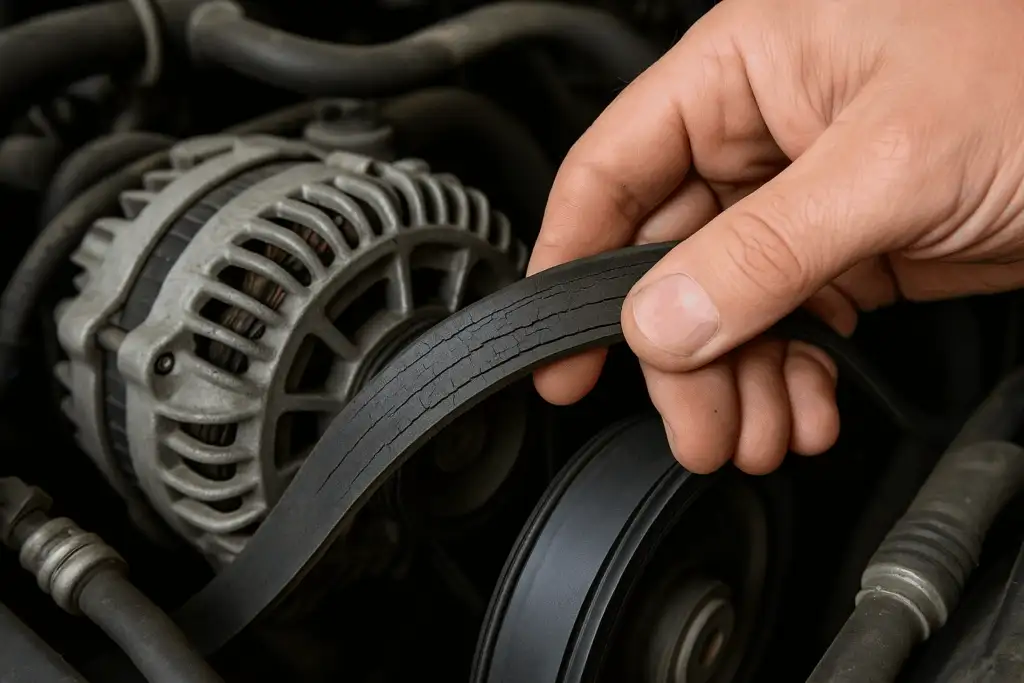
You can learn a surprising amount from a quick visual check, as long as the engine is off and cool. Open the hood and locate the belt, which will be a flat, ribbed band wrapped around the pulleys at the front or side of the engine. Look closely at the ribbed side for small cracks running across the ribs. A few tiny cracks are common on an aging belt, but deep or numerous cracks, chunks missing, or ribs that look worn flat are all signs of trouble.
Check the edges for fraying and the surface for a glossy, hardened look, which indicates glazing. Look for any wet or oily residue, and note whether the belt seems to sit squarely on every pulley. You can also check tension by pressing firmly on the longest span between two pulleys. A properly tensioned belt gives only slightly under pressure, while a loose one feels slack. If you spot any of these issues, or if you are unsure what you are looking at, it is wise to have a professional take a look. For official guidance on your model’s maintenance needs, the Kia owner resources are a helpful reference.
The Role of the Tensioner and Pulleys
The belt tensioner is the unsung hero of the system. It is a spring-loaded or hydraulically assisted arm with a pulley that keeps steady pressure on the belt, compensating for stretch and temperature changes. Over tens of thousands of miles, the spring loses strength, the bearing in the pulley wears, and the arm can develop play or stick. A worn tensioner may also vibrate or bounce visibly while the engine runs, which accelerates wear on the belt.
Idler pulleys, which guide the belt around the engine, can also fail. A bad bearing will often make a chirping, rumbling, or grinding sound that changes with engine speed. A technician can spin each pulley by hand to feel for roughness or play and can observe the tensioner while the engine idles. Replacing the belt and tensioner together is a common practice when the system has significant mileage, since both parts have aged at the same rate and a fresh belt on a worn tensioner is a short-lived fix.
Local Conditions That Stress Belts
Southwest Ohio’s climate is rough on rubber components. Temperature swings from a humid summer to a freezing January cause repeated expansion, contraction, and hardening. Salt and road grime thrown up on winter drives along Old Troy Pike, I-70, and I-75 can also find their way into the engine bay and accelerate wear on belts and pulleys. Short trips around Huber Heights and Dayton, where the engine rarely reaches full temperature, keep the belt in a cold, stiff state for more of its life.
Moisture adds another twist. Damp mornings and rainy weather can cause a belt to squeal until the heat dries it out, and a belt that is already worn will do this more readily. If your squeal seems to appear mostly on wet or cold days and then disappear, it is a strong hint that the belt or tensioner is marginal and is a good candidate for replacement before the season gets harsher.
When to Schedule Service
Waiting rarely helps, because a belt that squeals today may fail without warning tomorrow. Plan an inspection if you notice any of the following during your daily drive:
- Persistent squealing or chirping: The noise appears on startup, when turning the steering wheel, or when the air conditioning cycles on.
- Battery or charging warning light: A belt that slips cannot drive the alternator properly, and the battery light may flicker or stay on.
- Overheating or temperature fluctuations: Slipping can reduce water pump speed and raise engine temperature.
- Visible damage: Cracks, fraying, or missing rib sections on the belt itself.
- Mileage milestones: Many belts are replaced somewhere between 60,000 and 100,000 miles, though your owner’s manual gives the interval for your specific model.
If you want genuine components that match your Kia’s specifications, the dealership’s parts center can help you find the right belt and related parts. Using the proper replacement parts ensures correct fit, length, and rib profile.
Keep Your Kia Quiet and Reliable
A squealing belt is a small noise with big potential consequences, and cold weather is the perfect time to catch it. Regular inspections, timely replacement, and attention to the tensioner and pulleys keep your charging, cooling, and climate systems working the way they should. Pairing a belt check with a battery test and fluid inspection gives you a clear picture of how ready your vehicle is for the months ahead, and you can schedule service at a time that fits your day. Don’t let a chilly morning squeal turn into a roadside problem. Visit Kia of Dayton, located at 8560 Old Troy Pike, Huber Heights, OH 45424, and let the service team inspect your serpentine belt and tensioner so your Kia starts quietly every morning.
0 comment(s) so far on Chilly Morning Belt Squeal: Inspecting Serpentine Belts & Tensioners on Kia Models