


How to Prevent Sudden Battery Failure in Your Kia During Ohio Seasonal Temperature Swings
Key Takeaways
- Swings are the real threat: Rapid jumps between warm days and freezing nights stress a battery more than steady cold or steady heat.
- Summer does the damage, winter reveals it: Heat wears a battery down internally, and the first hard freeze exposes the weakness.
- Many Kias need a specific battery type: Models with idle stop and go (ISG) technology use an AGM battery, and a standard replacement can cause problems.
- Testing beats guessing: A quick battery and charging system test shows how much life is left before you end up stranded.
Anyone who has walked out to a Huber Heights driveway after a mild week, only to find a dead battery on the first frosty morning, knows how suddenly this happens. A battery test costs a small fraction of what a tow, a missed shift, and an emergency replacement add up to, and the warning signs usually appear well before the failure. Understanding how Ohio’s temperature swings affect your Kia’s battery gives you a chance to act while the fix is still easy.
Why Ohio’s Weather Is So Hard on Car Batteries
A battery is a chemical device, and chemistry reacts to temperature. In cold weather, the reactions inside slow down and the battery delivers less power, while the engine oil thickens and demands more power to turn over. In hot weather, the heat accelerates internal wear, causing fluid to evaporate in some designs and internal parts to degrade.
Southwest Ohio gives batteries a bit of everything. A summer afternoon along I-70 or I-75 can bake the engine bay, and a January night in the Miami Valley can drop well below freezing. Spring and fall bring days that start near freezing and end in the 60s. Each swing asks the battery to adapt, and a unit that is already aging can fail during the transition. The National Weather Service office serving the Dayton area is a useful resource for tracking incoming cold snaps and planning ahead.
Heat Damages, Cold Exposes
Many drivers blame winter for a dead battery, but summer is often the real culprit. Sustained heat degrades the internal plates and shortens overall life, and the damage builds quietly. The battery may still start the vehicle in warm weather because less power is needed, so nothing seems wrong.
Once temperatures fall, the weakened battery cannot deliver the extra power needed to crank a cold engine, and it fails seemingly out of nowhere. That is why autumn is one of the best times to have a battery tested. It lets you catch a summer-damaged unit before the first hard freeze finishes it off. Most automotive batteries last roughly three to five years, and Ohio’s swings can push them toward the shorter end.
Know Which Battery Your Kia Needs
Not every Kia uses the same kind of battery. Many newer models feature idle stop and go (ISG) technology, which shuts the engine off at stops to save fuel and restarts it instantly when you lift off the brake. That repeated restarting demands more from the battery, so these vehicles are equipped with an AGM (absorbent glass mat) battery designed for the workload.
Installing a conventional battery in an ISG-equipped vehicle can lead to premature failure and system problems, and the battery may also need to be registered or reset after installation so the vehicle’s charging system manages it properly. Your owner’s manual specifies the correct type for your model, and our technicians can confirm the right fit for your Kia before any work begins. You can also check our parts center for genuine replacement batteries designed for your vehicle.
Early Warning Signs Your Battery Is Fading
Batteries rarely fail without hints, though the hints are easy to dismiss. Watch for these signs during your normal driving:
- Slow or labored cranking: The engine turns over sluggishly, especially on cold mornings.
- Dim headlights or interior lights: Lights that look weak with the engine off or at idle suggest low reserve power.
- Warning lights on the dashboard: A battery or charging system light, or messages about the electrical system, deserve prompt attention.
- Electrical oddities: Slow power windows, a flickering display, or accessories resetting on their own can signal a struggling battery.
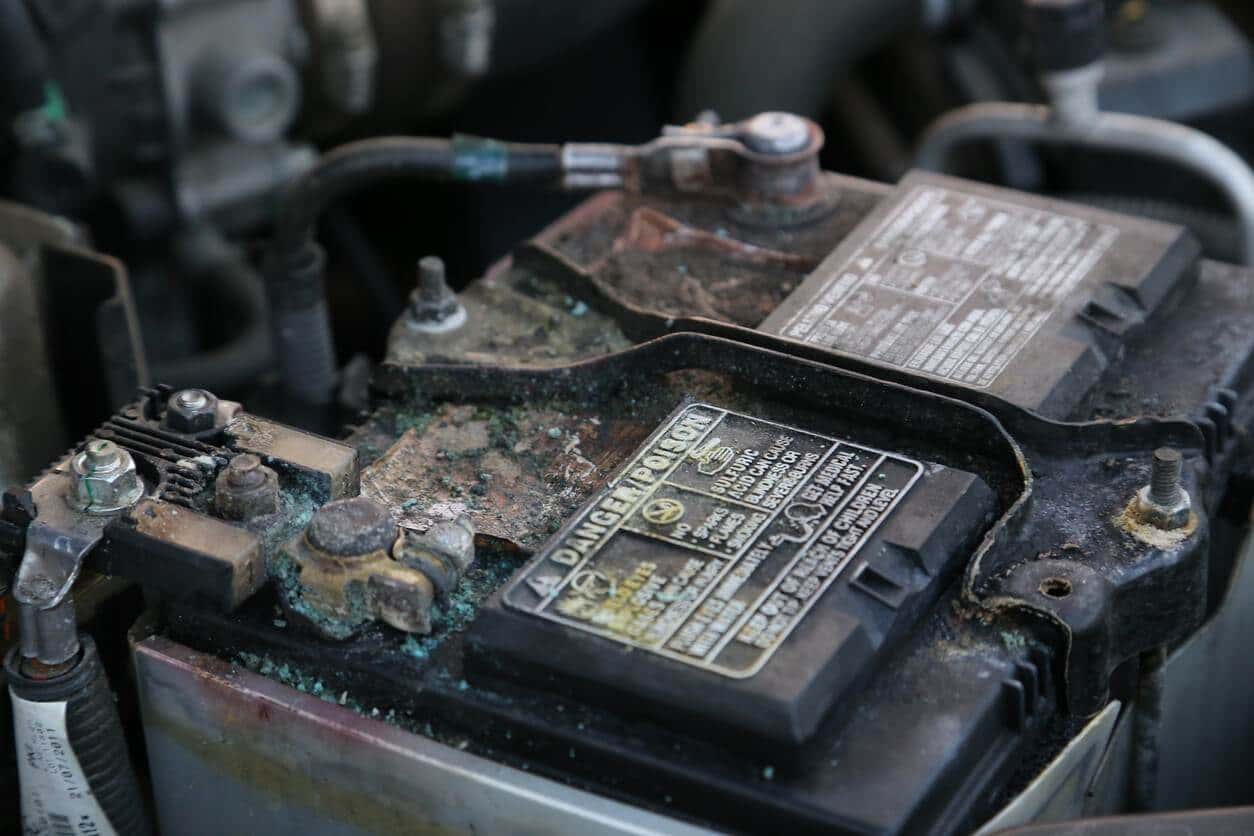
- Corrosion or swelling: White or bluish buildup on the terminals, or a bulging battery case, indicates trouble.
If you notice any of these, a quick test can tell you whether the battery has weeks left or only days.
Check the Charging System Too
A battery is only half the equation. The alternator recharges it while you drive, and if the alternator is weak, a brand-new battery can drain just as quickly as the old one. A common pattern is a battery that dies again shortly after a jump-start or replacement, which points to a charging problem instead of a bad battery.
Short trips make the situation worse. Quick runs around Huber Heights, a hop to the store on Brandt Pike, or a school drop-off do not give the alternator enough time to restore what the engine used to start. Over weeks, the battery sits at a low charge, which shortens its life and leaves it vulnerable to cold. Taking a longer drive now and then, ideally 20 to 30 minutes at steady speed, helps keep the battery topped off.
Keep Terminals and Connections in Good Shape
Even a healthy battery can fail to deliver power if the connections are poor. Road salt and moisture encourage corrosion at the terminals, and loose or dirty cables restrict the flow of electricity. Because many Ohio winters involve heavy salt use, this problem shows up often.
A technician can clean and tighten the connections, inspect the cables for damage, and confirm the battery is secured properly. A battery that vibrates in its tray wears out faster, and a loose hold-down is an easy fix that is often missed. The Battery Council International offers helpful general information about battery care and recycling if you want to learn more about how batteries age.
Habits That Help Your Battery Survive the Swings
A few simple habits can add months to your battery’s life and cut your odds of a surprise failure:
- Have the battery tested each fall, and again in spring if it is more than three years old.
- Turn off lights, heated seats, and accessories before shutting down the engine.
- Park in a garage when possible, since even modest shelter softens the temperature extremes.
- Avoid leaving the vehicle unused for long periods, since a battery slowly discharges when parked.
- Limit repeated short trips, or follow them with an occasional longer drive.
Pairing these habits with scheduled maintenance gives you the best chance of avoiding trouble. If you want a clear picture of what to expect, our service center can walk you through a seasonal inspection.
What About Hybrid and Electric Kia Models?
If you drive a hybrid or plug-in hybrid such as a Sportage Hybrid or Niro, or an electric model such as the EV6, you still rely on a conventional 12-volt battery to power the vehicle’s computers and bring the system online. When that smaller battery weakens, the vehicle may refuse to start or display warning messages even though the large traction battery is fine.
That makes the 12-volt battery easy to overlook and easy to blame incorrectly. A technician can test it quickly and confirm whether it is the source of the trouble, and your owner’s manual explains how your specific model starts and what to do if the 12-volt battery runs down.
Plan Ahead for Road Conditions
Even the healthiest battery cannot help much if you are stuck in a winter storm without preparation. Checking road conditions on OHGO before a longer drive lets you plan around closures and slowdowns, and keeping a few basics in the vehicle adds peace of mind. Jumper cables or a portable jump starter, a flashlight, and warm layers are small items that matter a lot on a freezing night.
If your Kia ever does fail to start, avoid repeated jump-starts. Each one is a clue that something is wrong, and continuing to jump a failing battery can strain the alternator and other electrical components. The better move is to get it tested and fixed properly.
What Waiting Can Cost You
Delaying battery care rarely saves money. Here is how the options typically compare:
- Battery and charging system test: A quick, inexpensive check that tells you how much life remains and whether the alternator is healthy.
- Planned battery replacement: A predictable maintenance expense, done at your convenience with the correct battery type for your Kia.
- Emergency replacement after a no-start: Often more expensive, plus the added cost of towing and lost time.
- Repeated jump-starts and stress on other parts: A hidden cost that can lead to alternator or electrical repairs you could have avoided.
Planning ahead wins on both cost and convenience, and members of the Rev Rewards program may find added value on routine service.
Get Your Kia Ready for the Next Temperature Swing
Ohio’s weather is not going to get more predictable, but your battery does not have to be a source of stress. A short visit this season can tell you where your battery stands and keep your daily drives around Huber Heights, Dayton, and the surrounding area reliable no matter what the thermometer does. Bring your vehicle to Kia of Dayton, located at 8560 Old Troy Pike, Huber Heights, OH 45424, United States, and let our service team test your battery and charging system. You can schedule your service visit online at a time that works for you.
0 comment(s) so far on How to Prevent Sudden Battery Failure in Your Kia During Ohio Seasonal Temperature Swings