

I-75 Commuter Shield: Protecting Your Kia K5 Turbo Engine with Proper Synthetic Oil Thermal Ratings
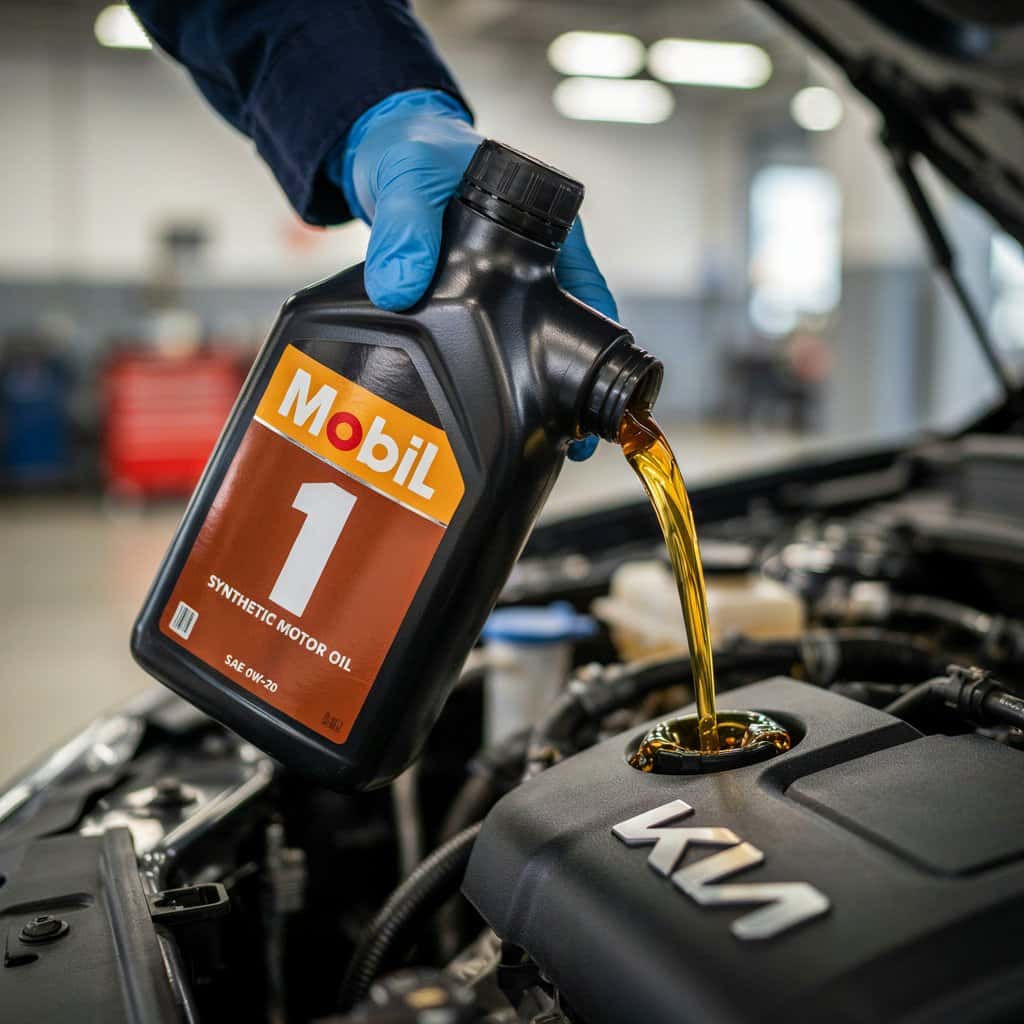
Key Takeaways
- The K5’s turbocharged engine generates significantly more heat than a naturally aspirated engine, making synthetic oil thermal rating a critical factor for daily I-75 commuters.
- Stop-and-go traffic near the I-75/I-70 interchange followed by sustained highway speeds creates repeated heat cycling that standard oil isn’t formulated to handle long-term.
- Using the correct synthetic oil viscosity and thermal specification protects turbocharger bearings and internal engine components from heat-related breakdown.
- Running the wrong oil or extending intervals too far can turn a $70 to $110 oil service into a $3,000-plus turbocharger or engine repair.
Huber Heights commuters who rely on I-75 to get in and out of Dayton every day put their K5’s turbocharged engine through a demanding cycle without ever really noticing it. The stretch through the I-75/I-70 interchange often means grinding through stop-and-go traffic, where the turbo spools up and down repeatedly, followed by miles of sustained highway speed where the engine settles into a different but equally demanding heat pattern. The K5’s turbocharged engine depends on synthetic oil that’s rated to handle this kind of thermal swing, and not all oil, even synthetic oil, is formulated the same way. A turbocharger that fails from oil that couldn’t handle sustained heat can mean a repair bill well over $3,000, compared to a proper synthetic oil service that costs a small fraction of that.
Why Turbocharged Engines Demand More From Their Oil
A turbocharger spins at extremely high speeds, sometimes well over 100,000 RPM, and its bearings rely entirely on a thin film of oil to stay lubricated and cool under that kind of load. Unlike other engine components that cool down relatively quickly after the engine is shut off, a turbocharger’s housing retains a significant amount of heat even after the vehicle is parked, a phenomenon known as heat soak. If the oil sitting in and around the turbo bearings at that moment isn’t formulated to resist breaking down under sustained high heat, it can begin to degrade, forming deposits that restrict oil flow the next time the engine starts.
This is why the K5’s turbocharged engine specifically calls for a synthetic oil with a thermal rating suited to turbocharged applications, not just any synthetic oil pulled off a shelf. The distinction matters more than many drivers realize, since oil that meets a lower thermal specification may still look and pour like proper synthetic oil while lacking the additive package needed to resist breakdown at turbo operating temperatures.
How the I-75 Commute Specifically Stresses the System
The drive along I-75 through the Huber Heights and Dayton area creates a specific pattern that’s harder on a turbocharged engine than steady-state driving would be. Commuters navigating the interchange with I-70 frequently experience:
- Repeated turbo spool-up and spool-down cycles during stop-and-go traffic, each cycle generating a fresh heat spike as boost pressure builds and releases
- A transition into sustained highway speed immediately after that stop-and-go stretch, asking the turbo to settle into a different, steady heat load without much of a cooldown period in between
- Frequent short trips during colder months, where the engine and turbo may not fully reach optimal operating temperature before the drive ends, preventing oil from circulating at its most effective viscosity
Each of these patterns individually wouldn’t be a major concern, but combined and repeated daily, they place real cumulative stress on oil that isn’t formulated to handle the thermal swings a turbocharged commuter engine experiences.
What to Look for in a Proper Synthetic Oil Service
Protecting the K5’s turbo isn’t just about using synthetic oil, it’s about confirming the oil meets the specific thermal and viscosity requirements the engine calls for. A proper service should include:
- Full synthetic oil meeting the manufacturer’s specified viscosity grade, formulated with additives designed to resist thermal breakdown at turbocharger operating temperatures
- Oil filter replacement rated for the same service interval, since a degraded filter can restrict flow to the turbo bearings regardless of oil quality
- Visual inspection of oil for discoloration or metallic particles, which can indicate early turbo bearing wear
- Confirmation of correct oil level and fill, since both overfilling and underfilling can affect how oil reaches the turbo under load
- Review of service interval against driving conditions, since frequent stop-and-go commuting on routes like I-75 may justify a shorter interval than the standard schedule assumes
Signs the Turbo May Already Be Under Strain
A turbocharger under early thermal stress doesn’t always fail suddenly. Commuters should pay attention to:
- A whining or whistling sound during acceleration that wasn’t present before, which can indicate bearing wear
- Blue-tinted exhaust smoke on startup, suggesting oil is finding its way past worn turbo seals
- A noticeable delay in boost response, sometimes described as increased turbo lag compared to when the vehicle was new
- Oil consumption between changes that exceeds what the owner’s manual describes as normal
Any of these signs warrant a prompt inspection rather than waiting for the next scheduled service.
The Cost of Proper Oil Versus the Cost of Turbo Failure
Comparing the numbers makes the case clearly:
- Full synthetic oil change with correct thermal-rated oil: typically $70 to $110
- Turbocharger inspection and minor service, if wear is caught early: roughly $200 to $400
- Turbocharger bearing or seal replacement: commonly $800 to $1,500
- Full turbocharger replacement after sustained oil-related failure: frequently $1,800 to $3,500, with some cases requiring broader engine repair if metal debris circulated through the system
The pattern holds true here as it does with most turbocharged engine maintenance: the correct oil at the correct interval is one of the cheapest and most effective ways to protect a component that’s expensive to replace once it fails.
I-75 is a demanding daily commute for any engine, and the K5’s turbocharged four-cylinder is capable of handling that grind reliably when it’s running on oil that matches its actual thermal needs. Kia of Dayton, located at 8560 Old Troy Pike, Huber Heights, OH 45424 carries the correct synthetic oil specification for the K5’s turbo engine and can confirm the right service interval for Huber Heights commuters logging heavy miles on I-75, keeping the turbo protected trip after trip.

0 comment(s) so far on I-75 Commuter Shield: Protecting Your Kia K5 Turbo Engine with Proper Synthetic Oil Thermal Ratings