

Kia Brake Pad Wear & Autonomous Emergency Braking (AEB) Care
Key Takeaways
- AEB and normal braking share the same components: When Autonomous Emergency Braking activates, it uses the same brake pads and rotors as everyday driving, meaning worn components affect both systems equally.
- Sudden AEB engagements can accelerate pad wear: A hard automatic braking event generates more heat and friction in a shorter span than a typical gradual stop.
- Sensor and camera calibration matter as much as mechanical brake health: AEB relies on radar and camera systems that need proper calibration to function accurately, separate from the condition of the brakes themselves.
- Dayton’s stop-and-go corridors mean more braking cycles overall: Frequent traffic near Wright-Patterson and Huber Heights commercial routes means more wear on brake components and more opportunities for AEB to engage.
Most drivers think of their brakes and their safety systems as two separate things, but on a modern Kia, they’re deeply connected. Routine brake pad replacement costs a fraction of what’s at stake if worn pads compromise stopping distance during an AEB-triggered emergency stop. For Kia owners around Huber Heights and Dayton, understanding how these systems work together helps explain why brake maintenance deserves attention well before pads reach their wear limit.
How Autonomous Emergency Braking Works
Kia’s Autonomous Emergency Braking system uses a combination of forward-facing radar and camera sensors to continuously monitor the distance and closing speed between the vehicle and objects ahead. When the system detects a high probability of collision and the driver hasn’t responded in time, it can apply the brakes automatically, sometimes with significantly more force and speed than a typical driver-initiated stop.
This system is designed to either prevent a collision entirely or reduce the severity of impact when a collision can’t be fully avoided. Because AEB is calibrated to react faster and often harder than typical human braking, when it does activate, it places a sudden, concentrated demand on the brake pads and rotors, generating a burst of heat and friction that differs from the more gradual heat buildup of routine braking.
It’s worth understanding that AEB doesn’t have its own separate braking hardware. It’s a system that takes control of the same hydraulic brake components a driver uses every day, which means the condition of those components directly affects how well AEB can perform when it matters most.
The Connection Between Brake Pad Wear and AEB Performance
Worn brake pads mean longer stopping distances, whether braking is initiated by the driver or by the AEB system. As pad material wears down, the system has less friction material available to convert kinetic energy into heat, which can meaningfully extend the distance a vehicle travels before coming to a complete stop, particularly during a hard, automated braking event.
Reduced pad thickness also affects heat dissipation. Thinner pads generate more concentrated heat during hard braking, which can lead to brake fade, a temporary reduction in braking effectiveness, during exactly the kind of high-stakes moment an AEB event represents.
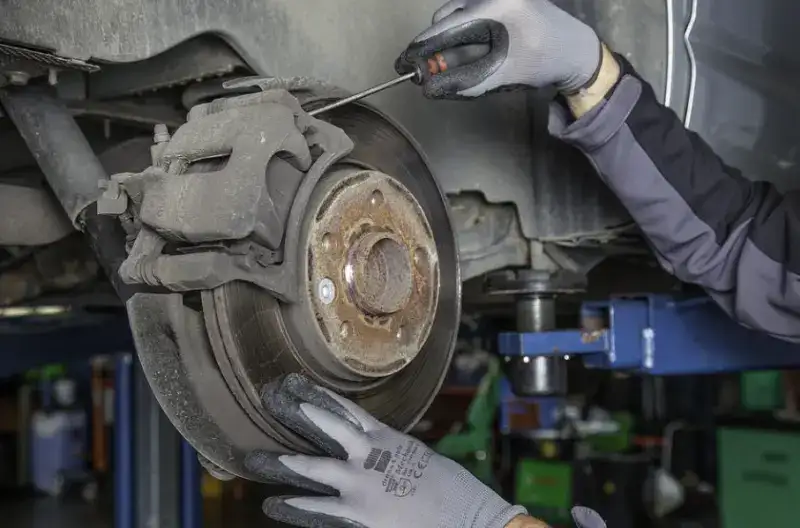
Rotor condition matters alongside pad thickness. Worn or warped rotors can reduce the consistency of contact between the pad and rotor surface, which affects stopping power regardless of how the braking event was initiated. A brake system operating at its best requires both healthy pads and rotors in good condition.
Understanding Sensor Calibration Separately From Brake Health
Radar and camera calibration is a distinct maintenance consideration from brake pad wear, but it’s equally important to AEB reliability. These sensors need to be properly aligned and calibrated to accurately judge distance and closing speed, and even a well-maintained brake system can’t compensate for a miscalibrated sensor that misjudges when braking is needed.
Windshield replacement or front-end collision repair can affect camera calibration, since many of these sensors are mounted near the windshield or front fascia. Following any such repair, proper recalibration is essential to ensure the AEB system continues functioning as designed.
Dirt, debris, or damage on sensor housings can also interfere with the system’s ability to accurately read the road ahead, which is why keeping the area around front-mounted sensors clean and undamaged supports reliable AEB performance.
Signs Your Brake System Needs Attention
- Squealing or grinding noise when braking: Often one of the earliest indicators that brake pads have worn down to or past their wear indicator.
- Longer stopping distances than usual: Can indicate worn pads, glazed rotors, or a combination of both affecting overall braking performance.
- Vibration or pulsation when braking: Frequently points to warped rotors, which can affect consistent contact with the brake pads.
- AEB warning light or system disabled notification: Should be addressed promptly by a technician, since this typically indicates a sensor or calibration issue separate from mechanical brake wear.
- Dashboard alerts about reduced forward collision assist function: Worth having diagnosed right away, since these often relate to sensor visibility or calibration rather than the brakes themselves.
Recommended Service Intervals
- Brake pad inspection: Generally recommended every 10,000 to 12,000 miles, or with each oil change, allowing a technician to measure remaining pad thickness before it reaches a level that could affect stopping performance.
- Rotor inspection: Typically performed alongside pad inspection, checking for warping, scoring, or uneven wear that could affect braking consistency.
- Sensor and camera calibration check: Recommended after any front-end repair, windshield replacement, or if AEB-related warning indicators appear, to confirm the system is reading the road accurately.
Routine brake pad replacement remains one of the more predictable and affordable maintenance costs a Kia owner faces, especially when weighed against the increased stopping distance and reduced margin for error that come with neglected pads.
Dayton Area Traffic and What It Means for Your Brakes
Huber Heights and the surrounding Dayton area see consistent stop-and-go traffic, particularly near Wright-Patterson Air Force Base and along commercial corridors like Old Troy Pike during commuting hours. This kind of driving means more frequent braking events overall, which naturally accelerates pad wear compared to steady highway driving, while also creating more scenarios where AEB has the opportunity to engage if a driver’s attention lapses even briefly.
Heavier traffic density also means shorter following distances are more common, which is precisely the situation AEB is designed to help with. Keeping brake components in good condition ensures that if the system does need to intervene, it’s working with hardware capable of delivering the stopping power the situation calls for.
Keeping Both Systems Working Together
Autonomous Emergency Braking is one of the more valuable safety features on a modern Kia, but its effectiveness depends entirely on the mechanical brake components it shares with everyday driving. A well-maintained brake system and a properly calibrated sensor suite work together, and neglecting either one leaves a gap in the protection this technology is designed to provide.
For owners who want the reassurance of a shop that understands both the mechanical and technological sides of modern brake systems, working with a team familiar with Kia’s specific AEB and brake service requirements makes a meaningful difference. Kia of Dayton, located at 8560 Old Troy Pike, Huber Heights, OH 45424, United States, offers brake inspection and AEB calibration service built around exactly these needs, giving local drivers confidence in both their everyday stopping power and their vehicle’s automated safety systems.

0 comment(s) so far on Kia Brake Pad Wear & Autonomous Emergency Braking (AEB) Care