


Kia EV6 & Niro EV Winter Preparation: Pre-Conditioning & Tire Pressure Monitoring Systems
Key Takeaways
- Pre-condition while plugged in: Warming the cabin and battery before you unplug uses power from the grid instead of your driving range, which makes a real difference on cold mornings.
- Cold lowers range, and smart habits recover some of it: Scheduled departures, heated seats, and sensible charging routines help you get more from every charge.
- Tire pressure drops with the temperature: Cold air shrinks tire pressure, and underinflated tires reduce range, wear unevenly, and trigger the TPMS warning light.
- Check pressure on cold tires: Use the pressure listed on the driver’s door jamb placard, not the number molded into the tire sidewall.
Anyone who has walked out to a frosted driveway in Huber Heights on a January morning knows the feeling of wanting a warm cabin right now. A few minutes of pre-conditioning and a quick tire pressure check cost almost nothing, while ignoring them can cost you range, tire life, and a surprise trip to the side of the road. Here is how Dayton area EV6 and Niro EV drivers can get their vehicles ready for the cold season.
Why Dayton Winters Matter for EV Owners
Southwest Ohio winters bring a mix of cold snaps, snow, freezing rain, and sharp temperature swings that can move from the forties to the teens within a day or two. For electric vehicle drivers commuting along I-70 and I-75 or running errands along Old Troy Pike, that variability is worth planning around.
Electric vehicles handle cold differently than gasoline cars. A combustion engine produces plenty of waste heat that warms the cabin for free. An EV makes far less waste heat, so the cabin heater, battery warming, and defrosting all draw energy from the same battery that moves the car. Many EV6 and Niro EV owners notice that their range drops meaningfully when the temperature falls, and that is normal rather than a sign of a problem.
The encouraging part is that you have plenty of control. A few habits, and a basic understanding of your vehicle’s systems, can help you recover a good share of that lost range.
How Cold Weather Affects EV6 and Niro EV Range
Cold temperatures affect an EV in several ways at once. The lithium-ion battery is less efficient when it is cold, because the chemical reactions inside slow down. The battery management system also limits how much power the pack can deliver and accept until it warms up, which can reduce regenerative braking strength on very cold starts.
Heating the cabin takes energy. Cold, dense air increases aerodynamic drag at highway speeds. Winter tires, snow, and slush add rolling resistance. Short trips make things worse, because the car spends a larger share of the drive warming up rather than cruising efficiently.
Many Kia EVs use a heat pump on certain trims and model years, which heats the cabin more efficiently than a resistance heater. Your owner’s manual and window sticker will confirm what your vehicle has. Even with a heat pump, planning ahead remains the most effective strategy.
Pre-Conditioning: Warm the Car While It Is Plugged In
Pre-conditioning means bringing the cabin, and in many cases the battery, up to a comfortable operating temperature before you start driving. The key advantage is where the energy comes from. If the vehicle is connected to a charger while it warms up, that energy comes from the grid rather than from your battery, so you leave with the cabin warm and your range intact.
On vehicles with connected services, you can usually start the climate system remotely and schedule departure times through the Kia Access app, provided your subscription is active. Some models also let you set climate preferences directly from the infotainment screen. Your owner’s manual explains how your specific setup works, and the service team can help you get started if you are unsure.
For fast charging in cold weather, many Kia EVs warm the battery automatically when you navigate to a compatible DC fast charger using the built-in navigation. That conditioning helps the battery accept power more quickly on arrival. Features and behavior vary by model and year, so confirm what applies to your vehicle.
Pre-Conditioning Habits That Protect Range
A handful of simple routines make cold weather driving easier and more efficient.
- Schedule departures when plugged in: Set a ready time so the car finishes charging and warming together, rather than leaving a cold battery and cabin to chance.
- Use heated seats and the heated steering wheel: Warming your body directly takes less energy than heating the entire cabin air.
- Park in a garage when possible: A garage keeps the battery and cabin a few degrees warmer, which reduces how much heating you need.
- Keep a healthy state of charge: Avoid letting the battery sit very low in freezing temperatures, and leave a comfortable reserve for winter trips.
- Clear snow and ice before leaving: Heavy snow adds weight and drag, and clear windows let you rely on moderate defrost settings.
Tire Pressure and the TPMS in a Cold Snap
Tire pressure changes with temperature. As a general rule, tires lose roughly one PSI for every ten degrees the air temperature drops. A tire that was properly inflated on a mild October afternoon can be noticeably low after a freezing night, and the change can be enough to trigger the warning light on your dash.
Electric vehicles are heavy, thanks to their battery packs, and they place real demands on tires. Underinflated tires increase rolling resistance, which reduces range. They also wear faster along the edges, run hotter, and can compromise handling and braking, which matters on snowy pavement.
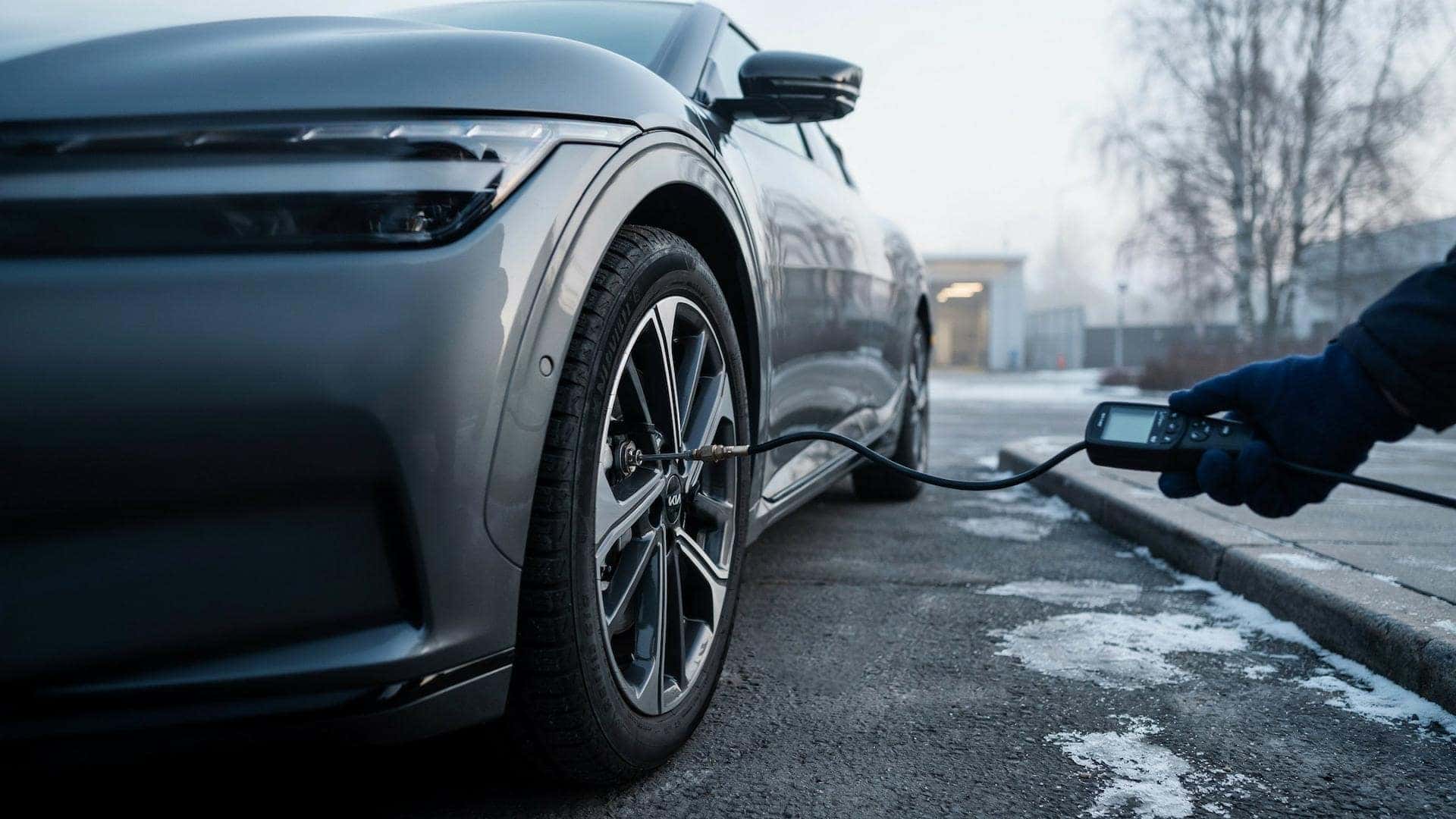
The tire pressure monitoring system, or TPMS, uses sensors in each wheel to report pressure to the vehicle. When pressure falls significantly below the recommended level, the TPMS warning light comes on. In cold weather, that light often appears on the first frosty morning of the season. It is a prompt to check your tires, not something to ignore.
Checking and Maintaining Tire Pressure
Proper pressure starts with the right number. Look for the placard on the driver’s door jamb, which lists the recommended cold tire pressure for your vehicle. The figure molded on the tire sidewall is the maximum the tire can hold, and it is not the target.
Check pressure when the tires are cold, meaning the car has been parked for a few hours or driven only a short distance. Use a reliable gauge, inflate to the placard number, and check all four tires. A spare or temporary tire, if your vehicle has one, deserves a look too.
If the TPMS light stays on after you have corrected the pressure, or if it flashes for a short time and then stays on, a sensor may need attention. TPMS sensors run on small internal batteries that eventually wear out, and they can also be damaged during tire service. Genuine and approved replacements are available through the Kia of Dayton parts center, and a technician can confirm which sensor is reporting a problem and reset or relearn the system if needed.
If you run a separate set of winter tires, ask about sensor compatibility and pressure settings for that set. Swapping between summer and winter wheels is easier when each set is properly matched to the monitoring system.
Winter Preparation Beyond Pre-Conditioning and Tires
A full winter check covers more than climate settings and air pressure. The 12-volt battery, which powers accessories and wakes up the high-voltage system, can weaken in cold temperatures, so it deserves attention. Wiper blades, washer fluid, brake condition, and tire tread depth also matter on slick roads.
You can review what your vehicle is due for through the Kia of Dayton service center, and a short conversation with the service team can help you decide what to prioritize before the cold arrives.
Before heading out in a storm, check current conditions on OHGO, Ohio’s traveler information resource, so you can avoid closures and heavy delays. It is also smart to confirm your vehicle has no open safety recalls by entering your VIN in the NHTSA recall lookup, which takes only a minute.
On the road, remember that regenerative braking may feel weaker when the battery is cold. Leave extra stopping distance, brake early, and avoid sudden inputs on snow and ice.
The Cost of Prevention Versus Repair
The difference between preparing early and reacting late can be significant. The ranges below are general and approximate, and they vary by model, year, and the work required. Always ask for a written estimate for your specific Kia.
- Tire pressure check and top-off: Usually free or very low cost, and the simplest way to protect range and tire life.
- TPMS sensor service or replacement: Typically a modest to moderate expense per sensor, depending on the part and the programming required.
- Premature tire replacement: A set of tires worn unevenly by chronic underinflation can cost several hundred dollars or more to replace.
- Lost range and extra charging: Cold weather without pre-conditioning means more frequent charging, which adds time and electricity costs over a season.
- Roadside assistance or towing: A flat or dead battery on a freezing morning adds cost and inconvenience beyond the repair itself.
Seen together, the numbers make a clear case for simple, regular habits.
Get Your Kia EV Ready for the Cold Season
Your EV6 or Niro EV is built to handle Ohio winters, and a little preparation helps it perform at its best. Pre-condition while plugged in, keep your tires at the correct cold pressure, and pay attention to the TPMS light when the temperature drops. Together, those steps protect range, tire life, and your comfort.
If your Kia is due for a winter check, or the TPMS light has been on, the team at Kia of Dayton, located at 8560 Old Troy Pike, Huber Heights, OH 45424, United States, can inspect your tires, sensors, and battery systems and recommend the right service. You can schedule service online at a time that works for you and head into the cold season ready to roll.
0 comment(s) so far on Kia EV6 & Niro EV Winter Preparation: Pre-Conditioning & Tire Pressure Monitoring Systems