

Kia Multi-Point Inspections: Preventing Costly Repairs for Dayton Drivers
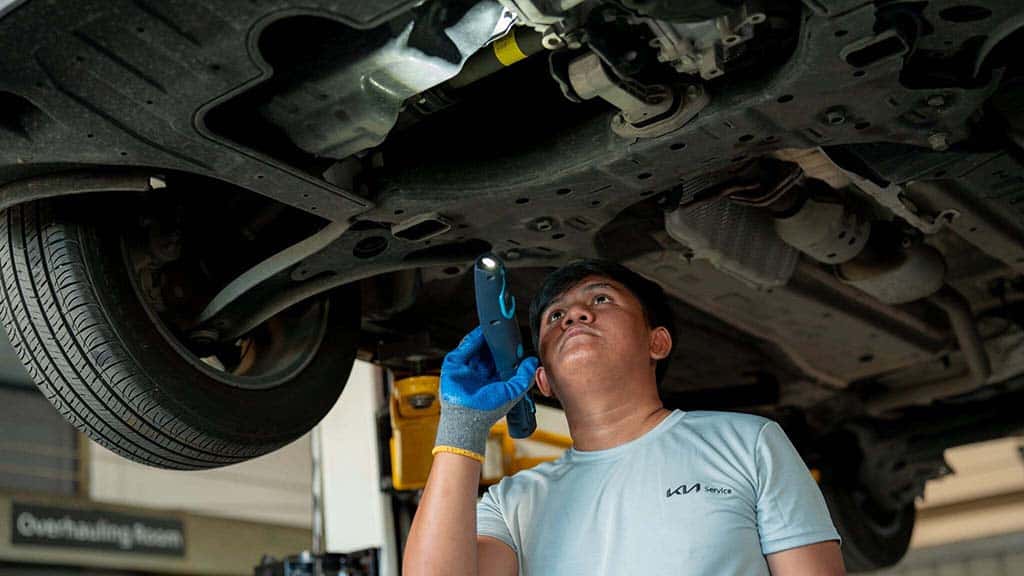
A Kia Sportage owner came into our service bay last month for a routine oil change. She had no specific concerns and her vehicle felt completely normal on her daily commute between Huber Heights and her workplace near Wright-Patterson Air Force Base on US-35. During the multi-point inspection that accompanies every oil change at Kia of Dayton, our technician identified a front control arm bushing that had cracked from Ohio’s freeze-thaw stress and a cabin air filter so compacted it was restricting airflow by an estimated 40 percent. Replacing the bushing before it failed completely cost $185. Had the bushing separated during a highway commute on US-35, the tow, emergency alignment service, and potential tire damage would have started at $650. The inspection that identified both items added zero cost to her oil change visit.
Dayton drivers live with road conditions that do specific and measurable things to vehicles over time. The freeze-thaw cycle that hits Montgomery County from January through March attacks suspension bushings, accelerates brake wear, and opens the potholes on Old Troy Pike and US-35 that transmit impact stress into alignment and steering components with every commute. The road salt that keeps those roads passable through winter initiates corrosion on brake lines, suspension mounting points, and underbody components that develops gradually and becomes structural if it goes undetected across multiple Ohio winters. The stop-and-go traffic on I-75 and US-35 during rush hour degrades engine oil, wears brake pads, and stresses transmission components at a rate that flat-road, moderate-climate driving simply does not produce at the same mileage.
The multi-point inspection exists to find what that environment is doing to your Kia before the driving environment reveals it on your terms rather than its own. A bushing that is cracking costs $185 to replace proactively and $650 or more to address reactively after it has separated. A brake pad at 2mm costs $180 to replace before rotor contact and $480 after rotor scoring requires resurfacing or replacement. A battery at 60 percent load capacity costs $145 to replace before it fails and $300 or more in tow, jump service, and battery replacement after it strands you in a Wright-Patterson parking lot on a January morning. The multi-point inspection is the mechanism that produces the first number in each of those pairs rather than the second.
At Kia of Dayton, every oil change visit includes a structured multi-point inspection at no additional charge. Understanding what the inspection covers, what it is specifically looking for in the context of Montgomery County’s road conditions and climate, and how to act on the report it produces is the information that converts a routine oil change visit into the preventive maintenance mechanism it was designed to be.
What the Multi-Point Inspection Actually Examines
The multi-point inspection follows a structured sequence that covers the systems Ohio’s driving conditions stress most consistently and that produce the highest repair costs when they fail without warning. Our technicians document specific measurements and observations rather than general impressions, which means the report you receive at the end of the visit gives you actionable information rather than a general assessment that requires interpretation.
The brake system receives the most detailed attention of any single inspection category because Ohio’s stop-and-go driving pattern and the grade changes on US-35 and I-75 accelerate brake wear at a rate that flat-road driving does not produce. Our technicians measure pad thickness at all four corners to the millimeter and document rotor condition for scoring, warping, and thickness relative to minimum specification. The brake fluid condition check assesses moisture content, which matters specifically because Montgomery County’s temperature cycling causes moisture absorption that lowers brake fluid boiling point to a range where stop-and-go thermal loading can produce fade. Caliper operation is checked for sticking or uneven engagement that produces the asymmetric wear that develops quietly and expensively.
The suspension and steering inspection is where Ohio’s pothole season most directly produces findings. Ball joints, tie rod ends, control arm bushings, and strut condition are all assessed for play, cracking, and wear that the freeze-thaw cycle and pothole impacts of a Montgomery County winter accelerate beyond what the mileage alone suggests. A bushing that might last 80,000 miles in a mild climate can show meaningful cracking at 40,000 miles in a vehicle that has been through three Dayton winters, and the inspection catches that cracking at a stage where proactive replacement prevents the sudden failure that produces the emergency service call.
The tire inspection measures tread depth at multiple points across each tire’s width rather than at the center only, which catches the edge wear patterns that alignment deviation and inflation issues produce before they become obvious on casual visual inspection. Tire pressure is checked and corrected against the door placard specification, which matters specifically because Montgomery County’s temperature swings between winter and summer produce pressure changes that leave tires running outside their optimal range for weeks without the driver noticing.
What Ohio’s Seasonal Cycle Does Between Inspection Points 🔧
Montgomery County’s four-season driving environment does not treat vehicle components uniformly across the year, and understanding which seasons produce the most rapid component degradation helps Huber Heights drivers understand why the inspection’s findings sometimes change significantly between service visits that are separated by only a few months.
The January through March freeze-thaw season is the most aggressive period for suspension and underbody components. Repeated temperature cycling between freezing and thawing stresses rubber bushings and seals in a way that sustained cold or sustained warmth does not, because the thermal expansion and contraction cycles that accompany each temperature transition work at adhesive bonds and rubber compound integrity in a cumulative way that is not visible until the component reaches its tolerance limit. A bushing that inspected cleanly in October may show cracking in March after two months of Montgomery County freeze-thaw cycling, and the inspection at the spring oil change is the visit that most consistently produces suspension findings that the fall inspection did not.
The April through June pothole season follows the freeze-thaw season with the impact stress that produces the alignment deviations and steering component wear that the winter’s freeze-thaw cycle prepared the suspension to be susceptible to. A bushing that developed cracking through the winter’s thermal cycling is more vulnerable to displacement from a pothole impact than a healthy bushing, and the spring inspection catches the combination of winter-initiated weakness and pothole-amplified deviation at the point where the two factors have combined into a finding rather than a projected future concern.
The summer months produce battery stress from the elevated temperatures that Montgomery County’s parking environments create. A battery that manages Dayton’s winter cold cranking demands but has been carrying a marginal load test result through multiple winter seasons may reach its functional limit during the sustained elevated temperatures of a summer parking cycle, and the summer inspection is often where the battery finding that the spring inspection flagged as marginal becomes the battery finding that the fall inspection would have found as failed.
What the Inspection Finds vs. What Ignoring It Costs 💰
The cost comparison between acting on multi-point inspection findings and deferring them is specific across the categories most consistently identified in Dayton-area Kia vehicles:
Findings caught at inspection and addressed proactively:
- Front control arm bushing replacement: $185 to $260
- Brake pad replacement at 3mm (before rotor contact): $180 to $280 per axle
- Battery replacement at marginal load test: $145 to $195
- Air filter replacement (engine or cabin): $45 to $90 each
- Tire rotation and pressure correction: $35 to $55
Same findings deferred until failure:
- Control arm bushing separation tow and emergency repair: $650 to $1,100
- Brake restoration after rotor scoring from worn pads: $420 to $780 per axle
- Battery failure tow and replacement: $295 to $450 including service call
- HVAC blower motor replacement from restricted cabin filter: $280 to $480
- Tire blowout from worn-past-minimum tread on I-75: $350 to $700 including tow and replacement
Multi-point inspection cost: $0, included with every Kia of Dayton oil change
Average cost difference between proactive and reactive responses to inspection findings: Three to five times higher for reactive correction across every category
The inspection is the only automotive service with a $0 cost that produces a documented picture of the vehicle’s condition across every major system. The value it delivers is entirely in how the customer responds to the report it generates.
A Vandalia Commuter Who Read the Report Correctly
A Kia Telluride owner from Vandalia came in last October for an oil change and received an inspection report showing a marginal battery load test result, front brake pads at 3mm, and a rear passenger tire at 3/32 of tread depth. He was not planning any additional services and asked our service advisor which items genuinely needed immediate attention versus which could wait until spring. We walked him through each finding specifically: the battery at marginal load capacity in October is the battery that fails in January when cold cranking demand peaks, the front pads at 3mm entering a Montgomery County winter of stop-and-go commuting on I-75 would reach the wear indicator before spring, and the rear tire at 3/32 represented a wet-weather safety threshold concern for fall rain events on US-35. He authorized all three services at that visit for $465 total. He called us in February to report that he had navigated a stretch of cold weather that had stranded three colleagues in the Wright-Patterson parking area without a single starting issue. The inspection found all three items. Responding to the report prevented all three outcomes.
Warning Signs You Are Not Getting Full Value From Your Inspection ⚠️
These patterns suggest a Huber Heights Kia owner may not be extracting the full preventive value from the multi-point inspection that every oil change visit includes:
Inspection reports that you have not read before leaving the dealership: The report is a document rather than a conversation if no service advisor has walked you through its findings. A report that goes into the glove box without review produces none of the preventive value the inspection was designed to deliver. Ask our team to walk you through each finding before you leave, specifically the items marked as attention needed or approaching service threshold.
Findings that have been noted on two consecutive inspection reports without action: An item that appeared at the spring oil change and appears again at the fall oil change has been developing for six months without correction. The component that produced the finding at the spring visit has six additional months of Ohio road stress on it at the fall visit, and the cost of correcting it at that stage is no lower than it was in spring while the risk of failure during the interval has increased.
Oil changes at facilities that do not include an inspection: A routine oil change without a documented multi-point inspection is a service interval without the preventive information the interval was designed to produce. Every Kia of Dayton oil change includes the inspection at no additional charge, which means there is no cost consideration that would justify an oil change without it.
A tendency to decline all inspection findings regardless of their specific severity: Some inspection findings genuinely can wait for the next service interval. Others cannot. An air filter that is approaching its service window can wait six weeks. A control arm bushing showing cracking cannot wait through a Montgomery County winter. Understanding the difference between the two categories requires either asking our service advisor for a prioritization conversation or reviewing the finding’s description on the report with that distinction in mind.
Inspection reports from multiple consecutive visits that all show clean results on every item: A vehicle that has been driven on Montgomery County roads through multiple Ohio winters and consistently shows no findings across all inspection categories warrants a conversation with our service team about whether the inspection methodology is capturing what the driving environment is producing. Clean results are the best possible outcome. Consistently clean results on every item across multiple winter seasons in Dayton’s road environment occasionally reflect a vehicle in genuinely exceptional condition and occasionally reflect an inspection that is not capturing the findings the environment is producing.
Deferring the oil change visit that includes the inspection because the vehicle feels fine: The vehicle feeling fine between inspection visits is specifically the condition the inspection is designed to catch findings within. Most of the items that multi-point inspections identify in Dayton-area Kia vehicles produce no driver-perceptible change before the inspection captures them. A cracking bushing does not feel different than a healthy one until it separates. A battery at 65 percent load capacity starts the vehicle normally until it does not. The absence of a symptom is not a reason to defer the visit that looks for the pre-symptom condition.
What Our Service Team Says
“The multi-point inspection is the most consistent value we deliver at every oil change visit, and it is also the service that produces the most variation in how customers engage with it. The customers who leave with the report, read it, ask questions about the findings, and act on the items that genuinely need attention are the customers who avoid the unexpected repair events that the inspection was designed to prevent. The customers who take the report, put it in the glove box, and come back six months later with the symptom that the previous report’s finding was describing are the customers who discover what the difference between proactive and reactive costs in a Dayton driving environment. The inspection is free. The information it produces is worth whatever the findings it catches would have cost to address reactively.” — Travis Holbrook, Senior Service Advisor, Kia of Dayton
When Acting on Two Findings Prevented a Winter Crisis
Maria drives a Kia Sorento and manages her family’s daily transportation between their Huber Heights home and her children’s schools near Needmore Road and her own workplace near the I-70 and I-75 interchange. She came in last November for an oil change and received a report showing a rear differential fluid that was overdue for service and a passenger rear brake caliper that was showing early signs of sticking from corrosion consistent with multiple Ohio winters of road salt exposure. Neither finding was producing any symptom she had noticed. She authorized both services for $295 total. In January, a colleague at her workplace who drives a similar vehicle experienced a caliper seizure on I-70 that produced an uneven braking event on an icy section of the interstate, requiring a tow and emergency caliper replacement at an unfamiliar facility for $780. Maria’s November inspection finding and same-day repair had cost $295 and prevented the I-70 winter scenario that the same developing condition would have produced in her vehicle had it gone unaddressed through another two months of Ohio salt season driving.
Your 30-Day Inspection Action Plan
This week, locate your most recent Kia of Dayton multi-point inspection report and review the findings column specifically. Note any items that were marked as attention needed or approaching threshold and identify whether those items have been addressed since the report was generated. If any attention-needed finding from a previous inspection has not been corrected, that item has continued developing through the driving since the report was produced and warrants a service conversation at the next available opportunity rather than at the next scheduled oil change interval.
Within two weeks, if your current oil change interval is approaching or past its mileage or calendar trigger, schedule your next oil change at Kia of Dayton and plan to spend ten minutes at the conclusion of the visit reviewing the inspection report with a service advisor before leaving. That ten-minute conversation converts the report from a document that provides information into a conversation that produces action, which is the difference between the inspection’s potential and its actual preventive value.
By month’s end, establish a personal practice of treating the multi-point inspection report as the most important document produced at every oil change visit and responding to its findings within two weeks of any item marked as attention needed. That practice converts the inspection from a complimentary add-on into the active preventive maintenance mechanism it was designed to be, and it produces the consistent cost difference between proactive and reactive repair that the Dayton driving environment delivers reliably to drivers on both sides of the inspection-action relationship.
Schedule Your Oil Change and Inspection at Kia of Dayton
The Sportage owner whose cracked control arm bushing cost $185 to replace proactively has been back twice since for oil changes, and both subsequent inspection reports have shown the replacement bushing in good condition alongside findings on other items that she has addressed on schedule. She described the first inspection’s findings as the moment she understood what the multi-point inspection was actually for, which was not confirming that her vehicle was fine but finding what Dayton’s roads had been doing to it that she could not see or feel from the driver’s seat. That understanding is what the inspection is designed to produce, and it is what every Kia of Dayton oil change visit is designed to deliver at no additional cost to every Huber Heights driver who brings a vehicle through our service lane.
Visit us at Kia of Dayton, 8560 Old Troy Pike, Huber Heights, OH 45424. Our service department is open Monday through Saturday. Schedule your oil change and multi-point inspection online through our website or speak with one of our service advisors directly. We serve drivers from Huber Heights, Dayton, Vandalia, Trotwood, Englewood, and throughout Montgomery County. Ohio roads do specific things to your Kia between service visits. The multi-point inspection is how you find out what those things are before they find you. 🔧

0 comment(s) so far on Kia Multi-Point Inspections: Preventing Costly Repairs for Dayton Drivers