

Kia Wheel Alignment and Tire Wear: What Dayton’s Potholes Are Doing to Your Suspension
Key Takeaways
- Potholes cause more than a jolt. A single hard hit can knock alignment out or damage suspension components even when the tire itself looks fine.
- Dayton’s freeze-thaw cycle makes it worse. Winter freeze-thaw patterns accelerate pothole formation on routes like Old Troy Pike and I-70, keeping the problem active most of the year.
- Uneven tire wear is a warning sign. Cupping, feathering, or wear concentrated on one edge usually points to an alignment issue rather than normal tread aging.
- Catching it early is far cheaper. An alignment runs $80 to $180, while ignored suspension damage can mean tie rod, strut, or control arm replacement costing hundreds more.
Most drivers notice a pothole the moment they hit it, a jolt through the steering wheel and a thud from the suspension, but far fewer connect that single impact to the slow, uneven tire wear that shows up weeks later. A wheel alignment runs about $80 to $180, while a pothole-damaged suspension component left unaddressed can turn into a repair bill several times that amount. Dayton’s road conditions make this a more frequent issue than drivers in smoother-paved regions typically deal with, and the connection between potholes, alignment, and tire wear is worth understanding before the damage compounds.
How a Single Pothole Impact Affects Alignment
A vehicle’s alignment refers to the precise angles at which the wheels meet the road, angles that are set at the factory and maintained through the suspension and steering components. A hard pothole impact can knock these angles out of specification in an instant, even when there’s no visible damage to the tire or wheel afterward. The force from hitting a deep pothole at speed transfers directly into the suspension arms, tie rod ends, and bushings, any of which can shift slightly or sustain hidden damage from a single significant impact.
What makes this tricky for drivers is that a car can drive perfectly fine immediately after a pothole hit, showing no obvious symptoms, while the alignment has already shifted out of spec underneath. The effects then show up gradually over the following weeks as uneven tire wear rather than as an immediate, obvious problem.
Why Dayton’s Roads Are Particularly Hard on Alignment
Southwest Ohio’s winter freeze-thaw cycle is a significant contributor to pothole formation, and Dayton sees this pattern play out repeatedly through the colder months. Water seeps into small cracks in the pavement, freezes and expands, then thaws again as temperatures fluctuate, gradually breaking the road surface apart from within. Stretches of Old Troy Pike near the dealership, along with sections of I-70 and Route 202 through Huber Heights, tend to develop potholes at a faster rate than roads in more climate-stable regions, and repairs don’t always keep pace with formation, especially in the weeks following a hard freeze.
Tyrell Banks, one of the technicians in the Kia of Dayton service department, has noted a clear seasonal pattern in the vehicles that come through for alignment checks. Late winter and early spring bring a noticeable increase in alignment-related complaints, tracking closely with the period when Dayton’s pothole damage from the winter freeze-thaw cycle is at its worst before road crews catch up with repairs.
How Alignment Problems Show Up as Tire Wear
When a vehicle’s alignment is out of specification, the tires don’t wear evenly across the tread, and the pattern of that uneven wear can actually help identify what’s gone wrong. Feathering, where the tread has a diagonal, saw-tooth pattern when run across with a hand, typically points to a toe alignment issue. Wear concentrated heavily on the inner or outer edge of a tire, while the center of the tread looks comparatively fresh, usually points to a camber problem. Cupping, a scalloped, wave-like wear pattern, can indicate alignment issues combined with worn suspension components like struts or shocks that are no longer controlling tire movement properly.
Because this wear develops gradually, drivers often don’t notice it during casual walk-arounds, and by the time it’s visually obvious, the tire has usually lost a meaningful portion of its useful tread life unevenly, sometimes requiring replacement well before the tire would otherwise have been due.
What an Alignment and Suspension Check Actually Involves
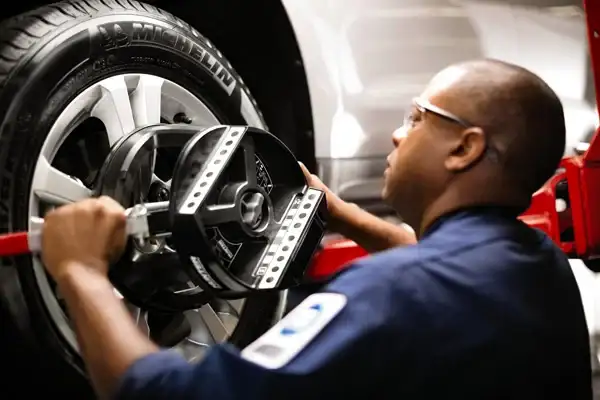
- Alignment measurement. Technicians use alignment equipment to measure camber, caster, and toe angles across all four wheels, comparing the readings against Kia’s factory specifications for the specific model.
- Suspension and steering component inspection. Tie rod ends, control arm bushings, and ball joints are checked for play or damage, since a pothole impact can loosen or damage these components even when the alignment numbers themselves look close to normal.
- Tire wear pattern assessment. The existing tread wear pattern is examined to help pinpoint what kind of alignment or suspension issue caused it, and to determine whether the tires themselves have sustained enough uneven wear to need replacement or rotation.
- Alignment correction. Once the underlying angles are measured, technicians adjust the suspension components to bring camber, caster, and toe back within factory specification, restoring even tire contact with the road.
Cost Breakdown for Alignment and Suspension Service in Dayton
- Standard four-wheel alignment: Typically runs $80 to $180 depending on the specific Kia model and whether adjustable components are present on all four corners.
- Alignment combined with tie rod or bushing replacement: Usually falls between $250 and $450 when a damaged component needs replacing before the alignment can be properly corrected.
- Strut or control arm replacement with alignment: Generally runs $400 to $700 depending on the specific component and whether one or both sides need attention.
- Deferred cost (uneven tire wear requiring early tire replacement): Replacing a set of tires well ahead of their expected tread life due to alignment-related wear adds a cost that a timely alignment check could have avoided.
Reading the Signs Before Tire Wear Sets In
Priya Nakamura, another technician who has worked across several Kia locations including Dayton, describes the most reliable early warning sign as a steering wheel that no longer sits straight when driving on a flat, straight road, or a vehicle that noticeably pulls to one side without driver input. “Most people wait until they see uneven wear on the tires themselves, but by then the tires have already taken the damage,” Nakamura has noted about the pattern seen in vehicles coming in for service. Catching a pulling sensation or an off-center steering wheel early, ideally soon after a known hard pothole impact, allows an alignment correction before the tires bear the cost of the underlying issue.
A Reasonable Habit for Dayton Drivers
Given how common significant potholes are on local roads through the winter and early spring, having an alignment checked after hitting a particularly hard one, rather than waiting for visible tire wear to appear, is a reasonable habit for drivers in this area. It’s a relatively small, quick service that protects a much larger investment in a set of tires, and it catches suspension component issues while they’re still a straightforward fix rather than a multi-part repair.
If you’ve recently hit a hard pothole or noticed your Kia pulling to one side, or if your tires are showing uneven wear, the team at Kia of Dayton, located at 8560 Old Troy Pike, Huber Heights, OH 45424, can check your alignment and suspension components before Dayton’s roads turn a small issue into a bigger one.

0 comment(s) so far on Kia Wheel Alignment and Tire Wear: What Dayton’s Potholes Are Doing to Your Suspension