

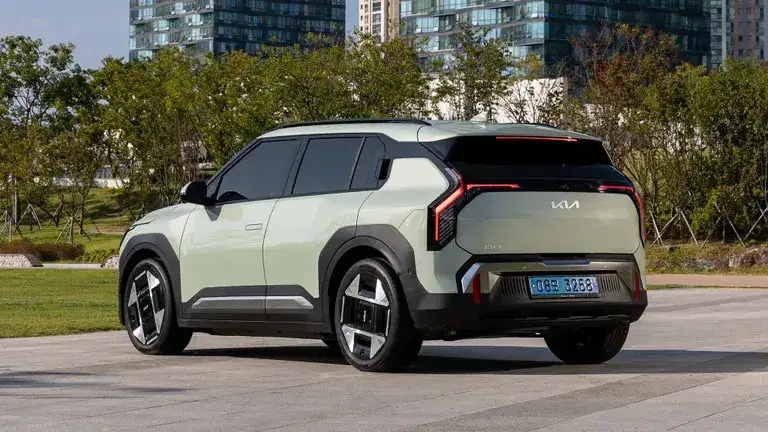
The Kia EV3 Arrival: Pre-delivery inspection and what to expect from Kia’s most affordable new EV.
Last month, a Kia EV3 owner came in from Vandalia six weeks after taking delivery after noticing his displayed range had been consistently lower than the EPA estimate from the first week of ownership. He had assumed the gap was normal and hadn’t raised it at delivery because he didn’t know what questions to ask during the pre-delivery walkthrough. When our technician completed a post-delivery inspection, the tire pressure across all four corners was eight to ten PSI below specification from the vehicle having sat in transit and dealership inventory through a cold Ohio winter, the charging profile had never been configured in the vehicle’s settings, and a software update that addressed the range estimation algorithm had been released after the vehicle shipped but before delivery without being applied. The pre-delivery inspection and software confirmation that should have addressed all three items before he drove off the lot? Included in the delivery process at no charge. The post-delivery diagnostic, tire correction, charging configuration, and software update applied six weeks into ownership? $180 in service time that a thorough delivery process would have eliminated entirely.
That six-week gap between delivery and a first service appointment driven by a range concern is the most consistent pattern we see with first-time EV owners at Kia of Dayton, and it almost always traces back to the same root cause: a delivery process that covered the vehicle’s features without fully addressing the vehicle’s configuration and condition. The EV3 is Kia’s most accessible electric vehicle to date, designed specifically to bring EV ownership within reach for drivers who have been waiting for an affordable, practical entry point into the segment. Making that entry point as smooth as possible requires understanding what the pre-delivery inspection should cover, what to verify before accepting delivery, and what the first year of Ohio EV3 ownership actually looks like from a maintenance and configuration standpoint.
Greater Dayton and Huber Heights represent exactly the kind of suburban driving environment where the EV3’s design philosophy makes the most sense. The daily commute distances on Old Troy Pike, Brandt Pike, and the I-70 corridor are well within the EV3’s range capability, the home charging infrastructure that Level 2 installation enables fits naturally into suburban home ownership, and the fuel cost savings that electric driving produces are most meaningful for the steady, predictable mileage accumulation that Huber Heights commuters generate year after year. But those advantages are fully realized only when the vehicle is delivered correctly, configured appropriately for Ohio driving conditions, and maintained with the understanding of what an affordable EV specifically requires.
What the EV3 Brings to the Dayton Market
The Kia EV3 represents a deliberate design decision to make electric vehicle ownership accessible at a price point that the EV6 and EV9 don’t reach, and the engineering decisions that achieve that accessibility are worth understanding because they directly affect what ownership looks like in Huber Heights and the surrounding communities.
The EV3 uses a single rear-mounted motor producing 201 horsepower in its primary configuration, with a 58.3 kWh battery pack delivering an EPA estimated range that positions it as a capable daily driver for the typical Greater Dayton commuting profile. The battery chemistry and thermal management approach reflect Kia’s second-generation EV platform experience, incorporating lessons from the EV6 and EV9 programs into a more cost-accessible package without sacrificing the fundamental reliability and longevity characteristics that define Kia’s EV reputation.
The vehicle supports DC fast charging at up to 101 kW, which delivers a 10 to 80 percent charge in approximately 31 minutes at a compatible charger. Level 2 AC charging at 11 kW from a home installation provides a full charge from depleted overnight. Understanding these charging characteristics before delivery allows new EV3 owners to set realistic expectations and configure the vehicle’s charging settings appropriately for Ohio’s seasonal range variation from the first day of ownership.
What Makes the EV3 Different From a Service Perspective
The EV3 shares the fundamental service simplicity of all-electric vehicles: no oil changes, no spark plugs, no transmission fluid, no timing belt, and no exhaust system maintenance. Over a five-year ownership period in the Greater Dayton area, the elimination of these service categories represents meaningful cost savings compared to a comparable ICE Kia.
What the EV3 introduces that differs from the EV6 and EV9 is a more accessible price point that may attract first-time EV owners who are newer to the specific maintenance and configuration requirements of electric vehicle ownership. The service items that remain on the EV3’s schedule, tire rotation, brake inspection, cabin air filter, brake fluid testing, and battery health monitoring, are straightforward and affordable. But they require a different mental model than conventional vehicle maintenance, and establishing that model correctly at delivery is more efficient than correcting misconceptions six weeks into ownership. 🔧
The Pre-Delivery Inspection: What Should Happen Before You Drive Away
The pre-delivery inspection, commonly called the PDI in automotive service language, is the systematic verification process that confirms every new vehicle is in the condition its manufacturer specification requires before a customer takes possession. On a conventional vehicle, the PDI is primarily a mechanical and cosmetic verification. On the EV3, it extends into software, configuration, and charging system verification that conventional PDI protocols don’t include.
Understanding what a complete EV3 PDI should cover allows new owners to verify that each item was addressed during the delivery process and to ask specifically about any item that wasn’t clearly confirmed.
Mechanical and Condition Verification
The mechanical PDI for the EV3 covers tire pressure verification at the placard specification, not the pressure the tires carried through transit and storage. Transit and dealership inventory time, particularly through an Ohio winter where temperatures fluctuate significantly, creates consistent tire pressure variation that requires correction to specification before delivery. A tire pressure correction that takes two minutes in service has a direct impact on range display accuracy and handling from the first drive.
Brake system inspection confirms pad thickness and rotor condition are within new-vehicle specification, and a brake pedal feel assessment verifies the regenerative braking system is engaging correctly through its full deceleration range. Brake fluid moisture content baseline testing establishes the starting point for future service comparisons and confirms the fluid is within specification at delivery.
Cabin and engine air filter condition verification confirms both are clean and correctly installed after transit. Suspension and underbody inspection for any transit damage, particularly on vehicles that experienced the road and temperature conditions of an Ohio winter during transport, confirms structural integrity before delivery.
Software and Configuration Verification
This is the PDI component most specific to EV3 delivery and most consequential for first-year ownership experience in Ohio. The EV3’s software platform receives updates that address range estimation accuracy, charging management optimization, thermal management parameters, and driver assistance system calibration. A vehicle that spent several weeks in transit and dealership inventory may have been manufactured with a software version that predates updates released during that period.
Confirming the vehicle is running the current software version at delivery ensures the range estimation algorithm, charging management system, and thermal management parameters reflect the latest improvements Kia has released. An EV3 delivered on outdated software isn’t defective, but it may display range estimates, charging behavior, or thermal management responses that a current software version would have improved, and the new owner may attribute these characteristics to the vehicle’s fundamental capability rather than to a software version that a delivery-day update would have resolved.
Charging profile configuration in the vehicle’s settings menu is the second most consequential delivery-day item for Ohio EV3 owners. The vehicle’s daily charge limit should be set to 80 percent state of charge for routine Huber Heights commuting, with the departure time scheduling configured to ensure the battery is at temperature and the cabin is preconditioned when the vehicle reaches the driver rather than when it leaves the charger. These settings take five minutes to configure at delivery and directly affect both daily ownership convenience and long-term battery health.
A Kia EV3 owner from Trotwood came in last February after his vehicle had been taking significantly longer to reach full charge than the specification suggested on his Level 2 home charger. The charging schedule in the vehicle’s settings had been configured with a departure time that caused the vehicle to delay charging until two hours before the set departure, which in winter conditions meant the battery thermal management system was simultaneously trying to warm the battery and complete the charge cycle, reducing effective charge rate. Reconfiguring the charging schedule at our Old Troy Pike location took twelve minutes and resolved the charge time concern entirely. The owner had assumed the behavior was a limitation of his charger or the vehicle’s cold-weather charging capability for three months before the appointment.
What Ohio EV3 Ownership Looks Like Across the First Year
Building the correct expectations for EV3 ownership in Huber Heights and Greater Dayton before those expectations are formed by winter range reduction or charging behavior surprises makes the first year of ownership significantly more satisfying than discovering these characteristics reactively.
Winter Range and Ohio Temperature Reality
The EV3’s EPA range estimate applies at moderate temperatures. Ohio winter driving in Huber Heights, where overnight temperatures drop into single digits through January and February and morning commutes begin on a battery that has been cold-soaked in a garage or driveway, produces real-world range that can be 20 to 30 percent below the EPA figure during the coldest weeks.
This is not a defect or a warranty concern. It is the consistent behavior of lithium-ion battery chemistry in cold temperatures, and it affects every EV on the market to varying degrees. Understanding this range variation before the first January morning prevents the concern that generates unnecessary diagnostic appointments and allows EV3 owners to plan their charging habits appropriately from the first cold week of ownership.
Preconditioning the EV3’s battery and cabin while the vehicle is still connected to the Level 2 home charger is the most effective cold-weather management strategy available. The vehicle performs the battery warming and cabin heating on grid power rather than battery power, meaning the EV3 arrives at the start of every Huber Heights winter commute with a warm battery and a warm cabin without having spent range to achieve either. Setting the departure time in the charging settings activates this preconditioning automatically.
The Tire Rotation Priority for Ohio EV3 Owners
The EV3’s rear-mounted motor delivers all of its torque through the rear axle, creating a rear tire wear pattern that advances faster than front tire wear under normal driving conditions. Kia recommends tire rotation every 7,500 miles on the EV3, which is more frequent than many conventional vehicle rotation intervals specifically because of this rear-drive torque delivery pattern.
Missing a rotation interval on the EV3 creates a wear differential between front and rear axles that becomes expensive to address once it exceeds the range where rotation can equalize the wear. In Greater Dayton driving, where the stop-and-go pattern on Old Troy Pike and the I-70 corridor produces repeated full-throttle electric motor launches from stops, the rear tire loading that rotation management is designed to equalize accumulates at a rate that makes the 7,500-mile interval a genuine priority rather than a conservative recommendation.
Brake System Monitoring and the Regenerative Braking Consideration
The EV3’s regenerative braking handles the majority of deceleration during normal Greater Dayton driving, which extends friction brake pad life meaningfully compared to a conventional vehicle. The complication is the same one that affects every EV’s brake system: reduced friction brake use means rotors don’t self-clean through regular pad contact, allowing surface corrosion to develop more persistently than it does on a conventionally braked vehicle.
An annual brake inspection that specifically evaluates rotor surface condition for corrosion accumulation alongside the standard pad thickness measurement is the appropriate inspection cadence for the EV3 in Ohio’s salt and moisture environment. The inspection is complimentary at the Old Troy Pike location with any service visit and provides the rotor condition assessment that the EV3’s regenerative braking pattern makes more important than the vehicle’s light friction brake use might suggest. 🔧
Warning Signs Your EV3 Needs Attention in the First Year
These indicators in the first year of EV3 ownership in Huber Heights warrant a service appointment at the Old Troy Pike location rather than a wait-and-see approach, because first-year findings on a new vehicle have warranty implications that make prompt documentation valuable.
A displayed range that is consistently more than 25 percent below the EPA estimate after temperatures have moderated past 50 degrees in spring warrants a battery health diagnostic to confirm the traction battery is within its designed capacity specification rather than simply experiencing the expected cold-weather variation.
Charging behavior that differs significantly from the specification, including charge rates that are consistently lower than the vehicle’s onboard charger capacity at a confirmed Level 2 source, warrants a charging system diagnostic that distinguishes between a vehicle-side concern, a charger-side limitation, and a configuration setting that is producing the unexpected behavior.
Brake pedal feel that has changed from delivery-day character, specifically a pedal that feels less progressive or requires more travel before the friction brakes engage, warrants a brake system inspection that evaluates rotor condition alongside the standard pad thickness measurement.
Rear tire wear that appears significantly more advanced than front tire wear before the 7,500-mile rotation interval indicates the rotation is overdue or that the wear rate is faster than the interval accounts for in Huber Heights driving conditions.
Any high-voltage system warning should be treated as a same-week appointment with documentation request for warranty purposes. First-year high-voltage warnings on a new EV are rare but warrant prompt attention and documentation regardless of whether the symptom resolves on its own.
Infotainment or driver assistance behavior that feels inconsistent with delivery-day performance, particularly if a software update notification has been dismissed multiple times, warrants a software update confirmation appointment that ensures the vehicle is running current Kia-released software.
Your 30-Day EV3 New Owner Plan
This week: Confirm your charging setup and configure the vehicle’s charging settings before your second full charge cycle. Set your daily charge limit to 80 percent in the charging settings menu, input your typical departure time to activate battery preconditioning scheduling, and confirm your home charger is delivering the correct charge rate by monitoring the in-vehicle charging display during your first Level 2 session. These three configuration steps take less than 15 minutes and directly affect daily ownership convenience and long-term battery health from the first week of Huber Heights ownership.
Within two weeks: Download the Kia Connect app if not already installed and link your EV3 to your account. The app provides remote charging monitoring, battery state visibility, range estimation, and service reminder notifications that make EV ownership management significantly more convenient than relying on in-vehicle information alone. Confirm through the app or the infotainment system’s software menu that your vehicle is running the current Kia-released software version, and initiate any available update while connected to your home WiFi network.
By month’s end: Schedule your first EV3 service appointment at the Old Troy Pike location and ask specifically for the new EV owner orientation inspection that our EV-certified technicians perform on first-visit EV3 customers. This appointment confirms tire pressure at specification, verifies software currency, reviews your charging configuration for Ohio seasonal optimization, establishes your brake fluid moisture baseline, and gives you a documented starting point for every subsequent service interval. The appointment typically takes less than 90 minutes and sends you home with a complete picture of your EV3’s condition and a clear maintenance calendar for the year ahead.
These three steps take less than two hours of your actual time in the first month and establish the ownership foundation that makes the difference between a first EV experience that confirms every positive expectation and one that produces preventable concerns that a thorough delivery process and first-month orientation would have addressed entirely.
The Kia EV3 represents a genuine opportunity for Huber Heights and Greater Dayton drivers who have been waiting for an affordable, practical entry point into electric vehicle ownership, and the advantages it offers in the stop-and-go driving environment of the I-70 and Old Troy Pike corridor are real and meaningful. Getting those advantages fully requires understanding what the vehicle needs from its first day of Ohio ownership, and the delivery inspection and first-month configuration that this guide covers is the foundation that everything else is built on.
Schedule Your EV3 Pre-Delivery or First Service Appointment Today
The Vandalia EV3 owner from the opening came back three weeks after his post-delivery service with his charging properly configured, his software current, and his tires at specification. His range displays were consistent with EPA estimates in spring temperatures and he understood specifically what to expect when October arrived and Ohio temperatures began their seasonal drop. He left his second appointment with a first-year maintenance calendar and the confidence of knowing exactly what his EV3 needed from Ohio ownership going forward.
At Kia of Dayton, our EV-certified technicians perform EV3 pre-delivery inspections and new owner orientations with the model-specific knowledge, software access, and Kia-approved procedures that Kia’s newest electric vehicle requires. Whether you are taking delivery of a new EV3 and want to ensure the delivery process covers every item it should, have already taken delivery and want to confirm your vehicle’s configuration and software are optimized for Ohio driving, or are approaching your first service interval and want a complete EV-specific inspection, we are ready to make your EV3 ownership experience everything Kia designed it to be.
Schedule your EV3 pre-delivery inspection or first service appointment today by contacting our service department or booking online. You’ll find us at 8560 Old Troy Pike, Huber Heights, OH 45424.
A thorough pre-delivery inspection and first-month configuration protect the investment your EV3 represents, ensure the efficiency and range advantages that make it Kia’s most accessible EV are fully realized from day one, and give you the confidence that Ohio’s most practical new electric vehicle is set up correctly for every mile of Greater Dayton driving ahead. That is what an informed EV3 delivery looks like.

0 comment(s) so far on The Kia EV3 Arrival: Pre-delivery inspection and what to expect from Kia’s most affordable new EV.