

Kia GDI Engine Maintenance: Preventing Direct-Injection Performance Loss on Dayton Highways
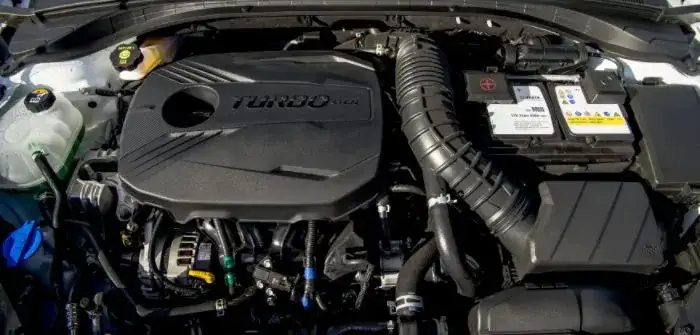
Every Kia Sportage, Sorento, Stinger, and Telluride rolling off Old Troy Pike onto I-70 is powered by a gasoline direct-injection engine that has a maintenance requirement most owners have never heard of. It has nothing to do with oil changes or tire rotations. It’s about carbon deposits that accumulate invisibly on intake valves from the first miles of ownership, build steadily through every commute on the Dayton interstate corridor, and eventually restrict airflow enough to produce rough idle, hesitation, and power loss that no fuel system cleaner can touch. When one Kia of Dayton customer brought in his Sorento at 90,000 miles with persistent misfires, the intake valves were coated with nearly four millimeters of carbon. The walnut blasting service ran $680. The same service at 60,000 miles, before symptoms arrived, would have cost $380.
Understanding the mechanism behind GDI carbon buildup, what Dayton-area driving patterns do to accelerate the timeline, and what the cleaning service actually involves is the clearest path to protecting one of the best powerplants Kia has ever produced.
Why Direct Injection Creates a Problem Port Injection Never Had
Kia’s GDI and T-GDI engines inject fuel directly into the combustion chamber at high pressure, bypassing the intake valves entirely. That’s the design choice that delivers the fuel efficiency and power density these engines are known for. It is also the design choice that creates the carbon problem.
In an older port-injected engine, fuel is sprayed upstream of the intake valve on every combustion cycle. The fuel acts as a continuous solvent, washing the back face of the valve clean with every pass. The valve stays clean because fuel contacts it thousands of times per hour.
In a GDI engine, that wash never happens. The intake valves see crankcase oil vapor from the PCV system, combustion blowby gases, and airborne contaminants drawn in through the intake, but nothing to wash those materials away. They deposit on the hot valve surface and bake into a progressively thickening carbon layer that hardens over time. No fuel additive, detergent gasoline, or tank-added cleaner can reach the intake valve in a direct-injection engine because fuel never flows past it. The only effective removal method is mechanical cleaning from the intake port side.
What Dayton Highway Driving Does to the Timeline
Carbon deposits accumulate on every GDI engine regardless of how it’s driven, but driving patterns that keep the engine in specific operating conditions accelerate deposit formation. Huber Heights and the broader Dayton metro area produce several of those conditions in the daily driving patterns that define life along the I-70 and I-75 corridors.
Sustained highway cruising on I-70 between Huber Heights and the I-675 interchange, or the daily I-75 run through the city toward downtown Dayton, keeps the engine operating at moderate RPM and steady throttle for extended periods. That operating mode produces elevated intake manifold temperatures that accelerate the baking of PCV oil vapor deposits onto valve surfaces. The engine isn’t working particularly hard, but the thermal environment at the intake valve is doing steady damage over the miles.
The stop-and-go conditions that bracket those highway segments compound the issue. Old Troy Pike south of I-70 handles over 26,500 vehicles daily and is one of the busiest roads in Huber Heights, generating the deceleration-and-acceleration cycling that loads the intake tract with PCV vapors at varying engine temperatures. Cold Ohio winters add frequent cold starts to the equation, and cold-start enrichment conditions produce elevated PCV oil vapor output during exactly the period when valve temperatures are lowest and deposits adhere most aggressively.
The result for a Kia Sportage or Sorento commuting the Huber Heights and Dayton corridor is that deposit accumulation may track closer to 40,000 to 50,000 miles before performance effects appear under mixed driving conditions, rather than the 60,000 to 80,000-mile figure more commonly cited for vehicles driven primarily on steady rural highway routes.
How Carbon Buildup Affects Engine Performance
Intake valve carbon deposits affect engine performance through a straightforward mechanism: they reduce the effective opening area through which the engine draws air on each intake stroke. As the restriction grows, several things happen in sequence.
Early-stage deposits, typically in the first 40,000 miles under Dayton driving conditions, rarely produce symptoms noticeable from the driver’s seat. The engine management system compensates for minor airflow restriction through fueling adjustments, and the driver experiences nothing unusual. Fuel economy may be marginally reduced, but not in a way that’s distinguishable from normal variation.
Moderate deposits in the range of 1 to 3 millimeters, which develop between roughly 40,000 and 70,000 miles under mixed stop-and-go and highway use, begin to produce noticeable effects. Cold idle becomes rougher than it was earlier in ownership. Throttle response on the morning I-70 on-ramp feels slightly less immediate than it once did. Occasional misfires at idle, particularly when the engine is cold, may appear and disappear in ways that are easy to attribute to fuel quality or temperature.
Heavy deposits beyond 3 millimeters produce measurable power loss across the RPM range, persistent rough cold idle, and misfire codes that return after spark plugs and ignition components have been checked. Owners at this stage often report that the engine feels like a different vehicle than it did at lower mileage, which is accurate in a literal sense: the engine is no longer breathing the way it was designed to.
What Walnut Blasting Actually Involves
Walnut blasting is the service Kia technicians use to remove hardened intake valve carbon deposits, and it is the only method that addresses the problem at its source. The process uses ground walnut shells delivered under compressed air through the intake ports to physically blast carbon off the valve surfaces. Walnut shells are hard enough to remove the deposits but soft enough not to damage aluminum port walls, valve seats, or valve stems.
The service requires intake manifold removal to access the ports directly, simultaneous shop vacuum application to capture spent media and dislodged carbon, and a borescope inspection before and after the service to document deposit condition and confirm cleaning results. A thorough walnut blasting service covers all intake valves across all cylinders and typically takes two to three hours at a certified Kia service center.
The cost range for walnut blasting at the preventive stage, before deposits have reached the performance-affecting threshold, runs from approximately $380 to $450 at a Kia dealer. At the corrective stage, when deposits are heavy and the intake manifold requires more thorough disassembly and cleaning time, that figure rises toward $600 to $700 or higher depending on the model. The difference in cost between the two scenarios is the clearest possible argument for scheduling the service before symptoms arrive rather than after.
A Borescope Inspection as the Starting Point
For Kia owners who are uncertain about their engine’s deposit condition, a borescope inspection is the right first step. A fiber-optic camera inserted through the intake port allows a Kia-certified technician to assess the actual deposit thickness on the intake valve faces without removing the intake manifold. The inspection is quick, documents the real condition of the valves at the current mileage, and provides a specific basis for deciding whether walnut blasting is appropriate now or can reasonably wait until the next service interval.
Kia Sportage, Sorento, Stinger, and Telluride owners past 40,000 miles who have not had intake valve cleaning performed, particularly those whose driving patterns include regular Dayton metro stop-and-go combined with I-70 and I-75 highway commutes, have the most to gain from a borescope inspection at the next service visit.
Staying Ahead of the Problem
The maintenance habit that keeps GDI carbon deposits manageable is straightforward once the mechanism is understood: schedule an intake valve inspection at or before 40,000 miles for vehicles driven primarily in Dayton stop-and-go conditions, and plan for walnut blasting service at approximately 50,000 to 60,000-mile intervals thereafter. That schedule costs a fraction of what corrective service at high-deposit mileage requires and keeps the engine performing at the specification Kia engineered it to meet.
The factory-trained service team at Kia of Dayton, located at 8560 Old Troy Pike, Huber Heights, OH 45424, performs borescope inspections and walnut blasting intake cleaning using Kia-certified procedures and equipment. Schedule your inspection and find out exactly where your GDI engine stands before the highway miles tell you.

0 comment(s) so far on Kia GDI Engine Maintenance: Preventing Direct-Injection Performance Loss on Dayton Highways